

The Need for a New Potato Wart Prevention Protocol
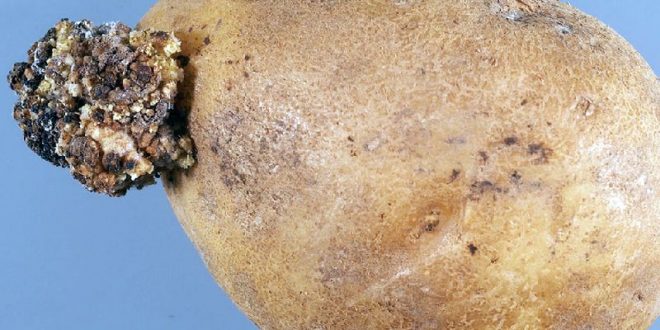
To stop the spread of the potato wart from Prince Edward Island (P.E.I.) to U.S. growing regions, U.S. potato organizations are requesting that the USDA create new phytosanitary protocols.
In a letter to USDA Undersecretary of Marketing and Regulatory Services, Jenny Moffitt, the National Potato Council, and twelve state potato groups urged the organization to collaborate with the Canadian Food Inspection Agency (CFIA).
The letter comes in response to a risk assessment released on October 14 by USDA’s Animal and Plant Health Inspection Service (APHIS), which found that without further mitigation measures in place, the disease is “very certain to be introduced” to the U.S.
Following a meeting between the Canadian Prime Minister, Justin Trudeau, and the U.S. President, Joe Biden, at the White House, the industry acknowledged that USDA was under considerable political pressure to reopen the border to table stock potatoes. However, the industry stated in the letter that it is still disappointed that last spring exports “were allowed to reopen with essentially the same protocol as before the ban was implemented.”
“We strongly urge you to reconsider implementing reasonable mitigation measures to deal with this unfortunate disease situation confronting potato production on PEI. We believe this can be done efficiently and without impacting trade in clean product for the upcoming season,” according to the letter sent.
To achieve the essential protection, a new protocol must be implemented right away, the group writes in the letter.
“It is obvious that the current approach (the 2015 Federal Order) no longer fulfills Secretary Vilsack’s standard and does not provide the necessary mitigation to protect the U.S. industry against disease introduction,” according to the APHIS risk assessment released on October 14.
In contrast to APHIS’ recent risk assessment, “it is surprising that APHIS would effectively return to the prior protocol given all the troubling information about the disease and the situation on PEI that was revealed following the export ban,” wrote the group. “Reinforced by this new risk assessment, the U.S. industry maintains its stance and urges you to address our questions in formulating the essential new protocol that this crisis demands.”