

Dutch Partners Unveil AI Breakthrough In Potato Cyst Nematode Diagnostics
Dutch agricultural laboratory HLB and agri-tech company Antonie have introduced what they describe as the world’s first AI-driven system for the automated analysis of potato cyst nematodes (PCN), a development that could significantly improve the speed, consistency and scalability of nematode diagnostics.
The technology was presented during the annual meeting of the European Society of Nematologists (ESN), where Antonie co-founder Peter den Hartog outlined the new approach, which combines artificial intelligence, automated microscopy and advanced image analysis to automate one of the most labor-intensive stages of PCN testing.
“This is an important breakthrough that impacts the entire sector,” said Den Hartog. “And a major step toward fully scalable nematode analysis.”
Potato cyst nematodes are among the most economically damaging soil-borne pests affecting crop production worldwide. Accurate detection and analysis are critical for crop management decisions, export certification programs and integrated pest management strategies. Traditionally, these analyses have depended on skilled laboratory technicians and extensive microscopy work, creating bottlenecks as demand for testing increases.
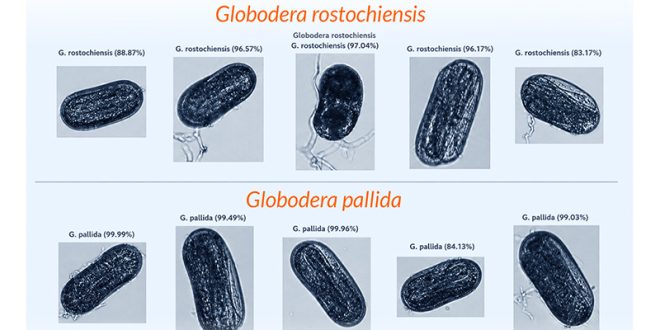
The newly developed system focuses on automating the analysis of eggs and juveniles extracted from opened cysts. According to the companies, existing procedures for isolating and opening cysts remain unchanged, while the assessment of cyst contents—previously conducted largely by hand—is now automated through AI-supported image analysis and microscopy.
“Laboratories around the world face the same challenge. The work is highly specialized, extremely labor-intensive and qualified personnel are increasingly difficult to find,” said Pieter Vos, Managing Director of HLB. “With Antonie’s technology, we can now support a significant part of this process without compromising quality or reproducibility.”
HLB participated in the development and validation of the methodology, contributing its expertise as a specialist laboratory focused on soil health, plant health and agricultural diagnostics.
Jerome H. Mol, CEO of Antonie, said the collaboration reflects the company’s goal of expanding the practical application of soil health monitoring technologies.
“HLB understands exactly what the market needs. That makes them the ideal partner to help realize our mission of ‘Improving Soil Health’,” he said.
The companies believe the technology could help address growing labor shortages in diagnostic laboratories while improving standardization and throughput. By reducing reliance on manual microscopy, the system is intended to deliver faster and more reproducible results across larger sample volumes.
According to HLB, the development supports its broader objective of making advanced diagnostic tools more accessible to growers and agricultural stakeholders.
“By combining new technologies with our expertise in soil and plant health, we can continue providing our customers with reliable analyses and future-proof solutions,” Vos said.
While developed with potato cyst nematodes in mind, the technology may also have applications in other cyst-sensitive crops, including sugar beet and soybean. The companies say broader adoption could contribute to more efficient diagnostics, better-informed crop management decisions and more sustainable agricultural production systems.
Founded in 2021, Antonie develops AI-based monitoring solutions for soil and crop health, combining automated microscopy, high-throughput analysis, drone imagery and satellite data. HLB operates as an independent research and advisory laboratory focused on agricultural diagnostics, soil health and plant health services.
The partners said the launch represents a further step toward the modernization of nematode diagnostics through automation and artificial intelligence, with the goal of delivering faster, scalable and standardized analysis for agricultural markets.