MSU Irrigation Tools Aim to Improve Water Efficiency for Michigan Growers

Michigan State University researchers are developing sensor-based tools designed to help growers use irrigation more precisely, as dry conditions increase pressure on agricultural water and energy use.
July 2026 was among the driest Julys on record in parts of Michigan, increasing growers’ reliance on irrigation to compensate for limited rainfall. The conditions have put renewed attention on research led by Younsuk Dong, assistant professor and irrigation specialist in MSU’s Department of Biosystems and Agricultural Engineering.
Dong and his team have developed the Low-Cost Monitoring System, or LOCOMOS, which uses sensors positioned in fields to monitor soil moisture, leaf wetness and other environmental conditions. Software analyses the data and provides irrigation recommendations to growers through a mobile application.
The technology is intended to help farmers avoid both under- and over-irrigation. Insufficient water can restrict plant development, while excess irrigation can increase disease pressure, saturate soils and contribute to nutrient losses.
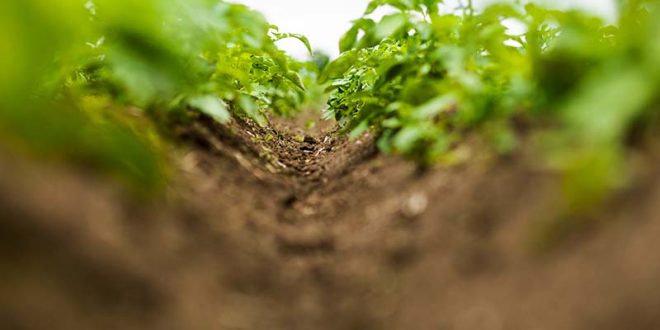
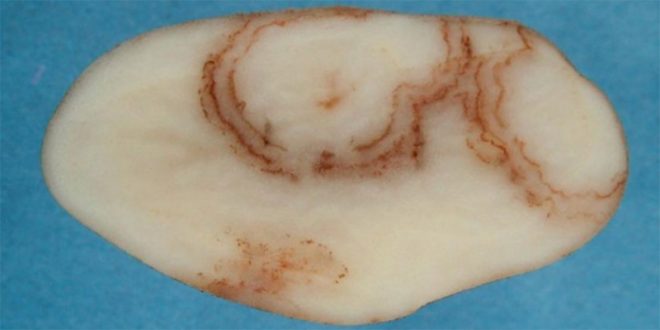
The work is particularly relevant to crops such as potatoes, where MSU researchers have previously investigated sensor-based irrigation scheduling and the relationship between water management, crop yield, quality and disease risk.
“Many farmers in Michigan recognize the value of supplementing rainfall with irrigation to increase profitability and protect against seasonal weather challenges,” said Laura Campbell, senior conservation and regulatory relations specialist with Michigan Farm Bureau. “Our farmgate value for irrigated land shows this. While we irrigate less than 10% of Michigan agricultural land, it produces nearly 40% of our farmgate value.”
Energy consumption represents another significant cost associated with irrigation systems, making more accurate scheduling potentially valuable both in reducing water use and controlling operating costs.
MSU’s irrigation research has included collaboration with Michigan commodity groups and trials across a range of crops. Previous university research in potato fields has examined how soil-moisture sensing can support irrigation decisions while reducing unnecessary water applications and the potential for disease.
The researchers are seeking to provide growers with practical tools that allow irrigation decisions to be based more closely on field conditions rather than fixed schedules, while protecting water resources and reducing unnecessary input costs.