New Potato Blackleg Treatment Targets Bacteria With Naturally Occurring Proteins

Researchers at the University of Glasgow are advancing a bacteriocin-based treatment for potato blackleg and soft rot, with field and storage trials now under way as the technology moves towards commercialisation.
The research group, led by Dr Joel Milner, Reader in Molecular Biosciences at the University of Glasgow, has spent more than 15 years investigating bacteriocins – proteins naturally produced by bacteria to kill competing bacterial strains.
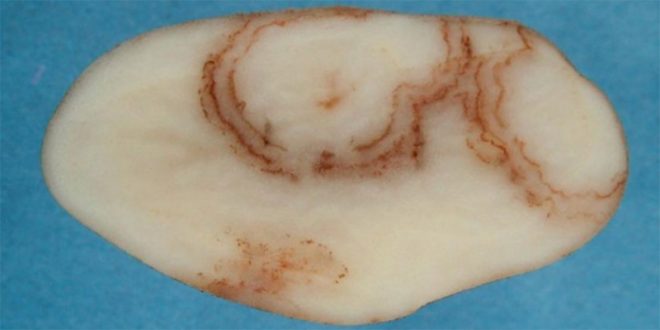
The approach is being developed as a potential treatment for seed and ware potatoes affected by blackleg and soft rot. In Great Britain, blackleg is caused by several Pectobacterium and Dickeya species, with Pectobacterium atrosepticum the principal cause.
According to the Industrial Biotechnology Innovation Centre (IBioIC), which supported the project at an early stage, genome-mining work identified around 50 potential bacteriocins. Seven showed promising disease-control properties, with four proving effective against UK strains associated with blackleg. Other candidates showed activity against related bacterial strains responsible for potato disease elsewhere.
Researchers also found that combinations of different bacteriocins could improve efficacy. Because individual bacteriocins attack bacteria in different ways, the approach could also help reduce the likelihood of resistance developing.
Early glasshouse trials showed that the treatment can suppress infection in seed tubers. Field and storage trials are now being conducted with the James Hutton Institute.
The development addresses a disease for which control options remain limited. The Agriculture and Horticulture Development Board states that there are currently no tuber treatments or products that can be applied in the field to control blackleg, leaving seed quality, hygiene, irrigation management, drainage and storage conditions among the principal measures available to growers.
UK research programs have estimated losses associated with blackleg at around GBP50 million annually, particularly through seed crop downgrading and rejection.
“What we’re working on is a novel antimicrobial solution to one of the most devastating diseases affecting potatoes. It’s likely to be affordable, easy to apply, and environmentally friendly,” Milner said.
“This isn’t about a silver-bullet cure. It’s about delivering a genuine improvement in the sustainability of an industry that matters hugely to Scotland, the wider UK, and indeed all countries where potatoes are grown.”
The project received early support from IBioIC and the University of Glasgow’s Impact Accelerator Fund, followed by additional backing from the UK Biotechnology and Biological Sciences Research Council.
Researchers are now preparing to launch prospective University of Glasgow spin-out Casdu Crop Solutions to take the technology towards commercial deployment. The University of Glasgow lists an ongoing 2024-2026 BBSRC-funded project led by Milner focused specifically on exploiting bacteriocins as a preventative measure against potato blackleg.
Dr Liz Fletcher, director of impact and deputy chief executive at IBioIC, said the combination of scientific development and a route towards commercialisation had been central to the project.
“What’s exciting here isn’t just the science, it’s that the team has a genuine route to market, with a treatment that could meaningfully cut reliance on the environmentally damaging methods growers have had to rely on until now,” Fletcher said.