

Precision Agriculture Transforms Potato Cultivation
As the agricultural sector faces mounting pressures from climate change, labor shortages, and a burgeoning global population, the adoption of smart solutions becomes crucial.
Potato farming, a vital component of global food security, stands to benefit significantly from the integration of Industry 4.0 technologies. These advancements – encompassing AI, IoT, robotics, and precision agriculture – are set to revolutionize traditional farming practices, enhancing efficiency, sustainability, and productivity.
Precision agriculture (PA) is a cornerstone of smart farming, utilizing technologies like GPS, IoT, and AI to optimize crop management. For potato farming, this means employing soil sensors, drones, and AI-driven analytics to monitor and respond to inter- and intra-field variability. Autonomous tractors and robotic harvesters, such as those developed by companies like John Deere and CNH Industrial, are increasingly common, performing tasks with higher precision and less labor.
Technological Integration in Potato Farming
John Deere and Precision Planting: John Deere has introduced advanced precision planting systems that utilize real-time data to optimize seed placement, soil conditions, and planting depth, significantly increasing potato yield and quality.
Resson’s Predictive Analytics: Canadian agri-tech company Resson uses AI and machine learning to provide farmers with actionable insights. Their platform collects data from drones and field sensors to predict crop performance, helping farmers make informed decisions about irrigation, fertilization, and pest control.
TuberScan’s Ground Penetrating Radar: B-hive Innovations’ TuberScan technology uses ground-penetrating radar (GPR), GPS units, and AI to monitor potato growth underground. This system provides precise data on tuber size and distribution, allowing farmers to optimize harvest timing and minimize waste.
Drones and Remote Sensing
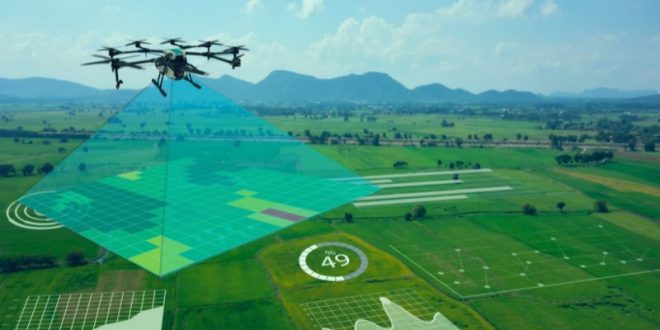
Drones are transforming the agricultural landscape by providing high-resolution aerial imagery and real-time data on crop health. For example, the ABZ Innovation drone system, which is already successful in several European countries, has recently entered the UK market to address labor shortages. These drones can precisely spray crops, reducing water and chemical use by up to 90% and 50%, respectively.
You can read the rest of this article in your complimentary e-copy of Issue 3 of Potato Business Digital 2024 magazine, which you can access by clicking here.