

Sorting: new technology for proper inspection
Billions of potatoes are processed every year, ploughed from fields and turned into a range of products including French fries, crisps, wedges and flakes. The variation in the raw material creates a major challenge for potato processors to deliver consistency in terms of production efficiency and yield optimization, as well as product quality, taste and texture, as demanded by both food manufacturers and consumers.
TOMRA Sorting Food has developed a range of sensor-based sorting machines and technology to address these issues and ensure that, from farm to fork, product and production is fully optimized. Jim Frost, TOMRA Sorting Food Market Unit Manager for whole-product sorting, said: “Our company has developed a range of cutting-edge technologies for the food industry which enables processors to maximize their yield at every stage”.
He pointed out that food safety is their uppermost priority:
“Our machines have been designed to provide highly efficient sorting to remove dangerous foreign materials from the production lines. These include rodents, glass, wood, metal and even golf balls which have been picked up from the field during harvesting. In addition, potatoes with a high degree of rot, discoloration and mechanical damage are sorted out.”
Unwashed potatoes
TOMRA Sorting Food has developed machines for every stage of potato processing so that production lines run more efficiently and sorting becomes more refined, reducing waste and producing a higher-quality final product. Besides removing foreign material, the company’s machines can sort by defects, biological characteristics, shape, size, color and density.
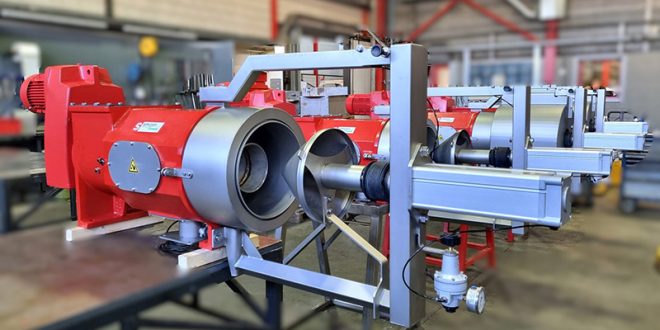
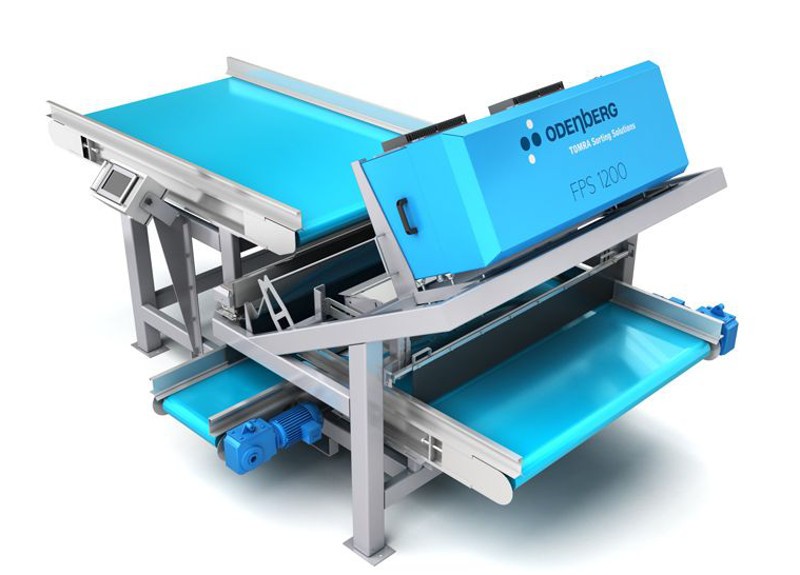
Pre-sorting is the first step after harvesting and TOMRA Sorting’s Field Potato Sorter (FPS) – photo – removes large soil clumps, stones and larger pieces of foreign material using NIR (Near Infra-Red) technology and intelligent finger ejectors. It is able to handle a very high volume of unwashed potatoes, up to 70,000 kg per hour, to help growers, processors and packers reduce labor and storage costs.
“The FPS can analyze and identify organic characteristics and compositions, distinguishing clumps of dirt, stones and foreign material from potatoes, even those with substantial soil covering”, Frost concluded.
You can read more onsecondary sorting process, detecting the defects, fine-tunning, multi-spectrum detectors or improved detection in the latest issue of our Potato Business Digital magazine. Find out more in our print magazine Potato Processing International, Jan/Feb issue.