

Harnessing the Power of Data
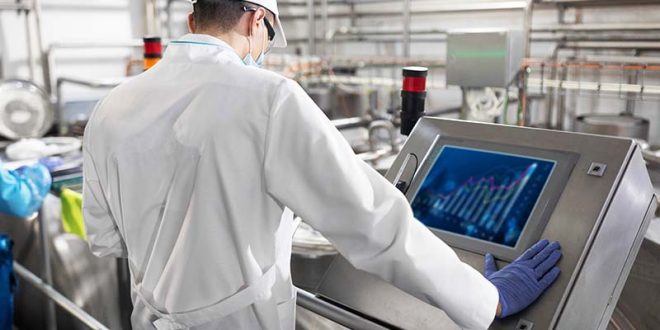
Every processor wants to identify and classify hidden issues in their production flow before a problem arises. Data integration and process monitoring benefits the processor by facilitating the collection and retention of important production data and creates a database of vital information on the production run.
by Dan Orehov
The primary benefits of data integration and process monitoring, powered by Industry 4.0 methodologies, is turning information into knowledge that can be harnessed to better manage incoming raw materials and optimize processes to achieve the next level in operational efficiencies. By revealing patterns and trends via real-time data or batch reports to better monitor and control the line, a potato processor can better manage their product quality, increase yield, reduce downtime and minimize labor to improve profitability.
According to Marco Azzaretti, Director of Marketing at Key Technology, as data integration becomes more prevalent, processors continue to move toward ‘lights out’ operation and experience more of the advantages that come with it. Line operators enjoy new freedom with the rise of remote connectivity and greater peace of mind by trusting the technology will successfully control itself or send alerts if problems that require human attention or problematic trends are detected. For processing equipment to operate successfully as an IIoT device, there needs to be a clear understanding of what data is needed to make critical operational decisions and how that data can be harvested from the equipment and processed into actionable information to improve the quality of those decisions.
“Because the future of potato processing includes more data integration to improve process monitoring and control, the next big thing will come from technologies that simplify that integration and facilitate adoption. Our new Discovery suite of software, which expands on the capabilities of our information analytics solutions, now comes standard on all new VERYX digital sorters and ADR EXOS automatic defect removal systems with a set of entry-level features, while options are available for more advanced data integration. Infield upgrades bring Discovery’s powerful functionality to any potato processor with installed VERYX sorters and ADR EXOS systems,” Azzaretti explains. “Our VERYX® digital sorters, installed on potato processing lines to remove foreign material (FM) and defects, are uniquely qualified to contribute to the data revolution. By default, these sorters ‘see’ 100 percent of the product on the line, recognizing color, size, shape, structural property and/or chemical composition, depending on the sensors. Equipped with our new Discovery™ software, the next generation of our information analytics solutions, VERYX can continuously collect, analyze and share data about the sorting process and every object flowing through the sorter, whether that data is used to make sorting decisions or not. VERYX seamlessly integrates with any line management software and other equipment to share that data across the enterprise. Additionally, the sorter can be accessed remotely via a secure portal to verify its operational status and make adjustments as required,” he adds.
Accessing Data in Real Time
Industry 4.0 has seen a renewed focus on innovation and is transforming how the food industry operates. Intelligent factories are seeking to optimize their processes in order to adopt lean manufacturing principles. Heat and Control specialists say the company has long held the philosophy of continuously improving their machine designs through ongoing R&D investment, so that they can provide customers with solutions to improve their operations through automation and efficiency. According to them, most of the manufacturer’s equipment has programmable controllers that allow it to connect to plant Manufacturing Execution System (MES) or data acquisition systems and can be remotely accessed for commissioning and customer support. The ease of integration and continuing evolvement of machine and device level networks is allowing more data to be available and is providing the end user with the capability to store, recover and analyze data. Innovation in processing equipment is seeing certain elements of the production line streamlined or eliminated altogether and process monitoring and data integration will continue to evolve at a rapid pace.
“Heat and Control Fryer technology is a great example of industry changing innovation. Understanding the importance of frying during the processing stage, ways to automate and simplify frying control has long been a priority. Heat and Control fryers have automation control which uses feedback from a moisture meter after the fryer, to control frying temperature and dwell time to meet moisture targets. This improves the quality of the final product, increases the shelf life and ensures the product is the right size, shape and texture. The frying parameters can be monitored remotely, giving the operator flexibility in how they manage the fryer. Waste can be monitored at key gateposts in the production line by using product weighing systems to control throughput to optimize the whole-of-line performance. Some heat exchangers can be fitted with O2 sensing to automatically regulate combustion levels to save fuel and reduce emissions while ensuring continuous efficiency. With more competition than ever in the food processing industry, especially snack, traditional manufacturing methods will continue to make way for innovation and lean manufacture,” explain Heat and Control specialists.
They conclude by saying that over the past five years, the integration and networking space has evolved rapidly and continues to do so. One of the biggest challenges of this is keeping up with trends in this space, and the speed with which new equipment and systems become ‘out of date’ or obsolete. One must keep up, as there is potential to lose scalability and networking capabilities, which newer systems include as standard. This flows on to the end users’ ability to integrate the equipment into their plant systems.
“We have found that by keeping up with technology, devices are more easily integrated into a control system and by taking advantage of this we are able to reduce engineering and provide access to more data. As a single source supplier, we add value through increased connectivity levels and digital data exchange, at all stages of the processing and packaging production line. Integrated product handling and processing lines for potato processors benefit from custom made fryers, heat exchangers and oil filtration systems, which integrate with FastBack® Conveyors to deliver product at twice the rate of comparable conveyors for high-speed production,” they end.
You can read the rest of this article in your complimentary e-copy of the March/April Issue of Potato Processing International magazine, which you can access by clicking here.