

Cutting: How to Adapt to Processors’ Needs
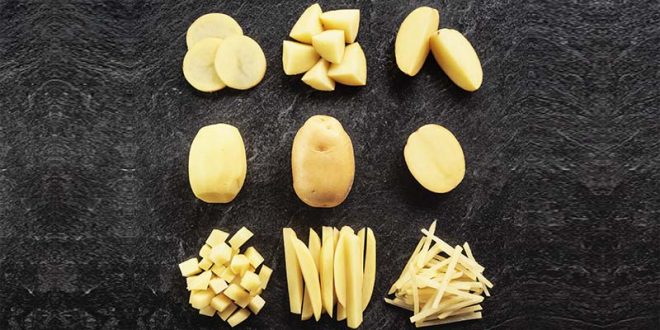
Potato processors are relentlessly seeking new cuts, higher yields, and faster, more sanitary machines with fewer maintenance costs. Adapting to these needs, on the part of the manufacturers of industrial cutting equipment for potatoes, means a continuous process of research and development (R&D).
Innovation plays a significant role in generating both new products and the processes that can deliver them accurately, repeatedly, and in high volume. Maximizing the product use and coming up with creative ways to add product offerings benefits the entire potato processing chain, especially since customers are seeking consistency, durability, and ease of product changeover and are becoming more sophisticated in the measurement of yield and throughput as well as starch losses attributed to cutting.
Experts agree that cutting efficiency, yield, and cost per pound of product is what spud processors are looking to improve. They are also looking into improving sanitation and optimizing the manpower and technical expertise required to run the processes and machines for cutting.
The cutting stage is a critical step and a major enabler for every potato processor. Whether the processor is a low-capacity one, a specialty-line processor, or has a high-capacity, 24/7 potato processing operation, good cutting equipment makes a big difference when it comes to producing high-quality potato products. A nearly endless range of different cut shapes and sizes will help the potential beneficiary’s potato products stand out and get consumer attention. On top of that, good cutting equipment will allow optimized line efficiency and overall yield maximization.
Sometimes additional auxiliary sizing or defect removal equipment is required to go with the slicer, French fry cutter, or dicer, so that’s a potential added cost. More complicated machines may require higher-paid workers, but the trend is to make things easier to set up and run with lower labor costs. It’s all a trade-off. A brand-new machine with worn-out knives damaged by rocks will not make a good product. Feeding methods, when to change out parts, gauging cut quality versus getting the highest volume of a usable product are all challenges processors must work to overcome.
You can read the rest of this article in your complimentary e-copy of Issue 4 of Potato Business Digital magazine, which you can access by clicking here.