

Good Quality Seeds Means High Productivity Down the Line
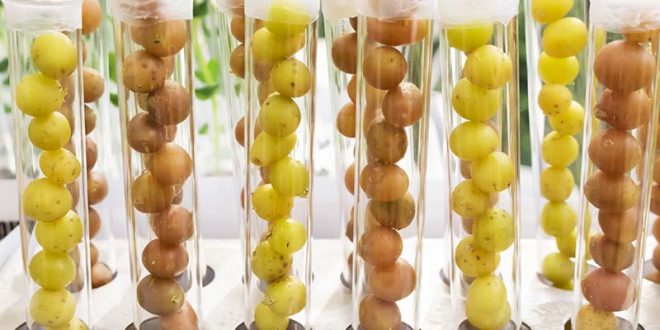
Growers traditionally propagate potatoes by planting seed tubers, and this is beneficial for several reasons. Seed tubers are easy to plant, and plants grow quickly and vigorously. Harvested cultivars also are uniform in size, and the yields are usually high.
While potatoes grown from tubers (seed potatoes) produce an exact genetic clone of the mother plant, those grown, for example, from true potato seeds are not clones and will have different characteristics than the parent plant. In this last particular case, the commercial aspect gets waived, which is not a business-oriented approach.
“Potato varieties are clones. When you plant a tuber of, say, Yukon Gold, you are really planting part of the same original plant that was first grown from true seed in the 1970s. Each generation of tubers is just more clones of that plant. Clones are predictable, which is a good thing for agriculture,” according to Cultivariable contributors.
Good quality seed is almost universally considered a requirement for high productivity in all potato production systems. For example, much of the yield gap currently constraining productivity in low-income countries is attributed to the poor quality of seeds. That is why, the potato seed sector development is a major concern for governments, researchers, development agencies, and civil society organizations. Potato seed systems are often characterized as formal or informal, although the informal seed system is complex and particularly in low-income countries there are many linkages between the two systems.
“In areas of high potato productivity (e.g., the USA and Europe), with seeds of certified high quality, formal systems are dominant, even though some production subsectors (e.g., organic producers) often use seeds that are not certified […],” Gregory A. Forbes, Amy Charkowski, Jorge Andrade-Piedra, Monica L. Parker, and Elmar Schulte-Geldermann wrote in their ‘Potato Seed Systems’ paper.
Potato Seed Systems in Europe and North America
Despite the use and availability of technology, seed potatoes are produced primarily in the northern agricultural regions of these two continents to avoid insect virus vectors, and a wide range of bacterial and fungal diseases common in warmer climates. In Europe and North America, commercial growers who plant large acreages of potatoes almost exclusively use certified seeds. However, in the United States, farmers who manage mixed vegetable farms, particularly organic farmers, generally use informal seeds, demonstrating that current seed systems tend to primarily serve growers who produce potatoes as a commodity.
You can read the rest of this article in your complimentary e-copy of Issue 1 of Potato Business Digital 2022 magazine, which you can access by clicking here.