

Balancing Frying Process Efficiency and Product Stability
The fat uptake and texture of fried potato products such as French fries and potato chips are affected by the quality of frying oils, fatty acid composition, and degree of degradation. Oil content is an important quality attribute in fried foods. Low-fat fried potato products have a hard and unpleasant texture. High oil utilization, on the other hand, is not cost-effective.
The choice of frying oil depends on many factors such as availability, price, frying performance, flavor, and stability of the product during storage. The most popular oil used for frying products is palm oil or its fraction, followed by soybean oil (SB), canola oil (CA), and lard (LA). Hydrogenated vegetable oils such as sunflower and rapeseed oil are also widespread.
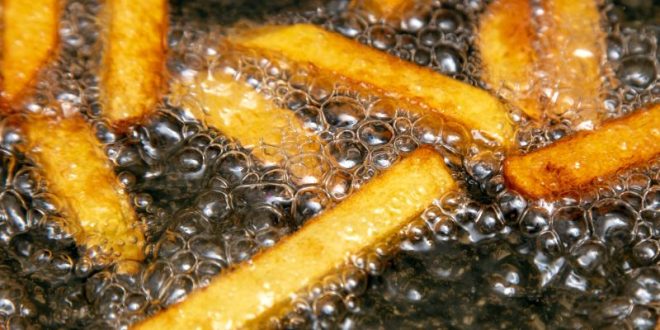
With economic development and a shift in eating habits, regular consumption of deep-fried foods such as French fries has recently increased. Deep frying is a food processing operation that involves simultaneous heat and mass transfers by immersing the food in hot oil at temperatures of 180 degrees Celsius or higher.
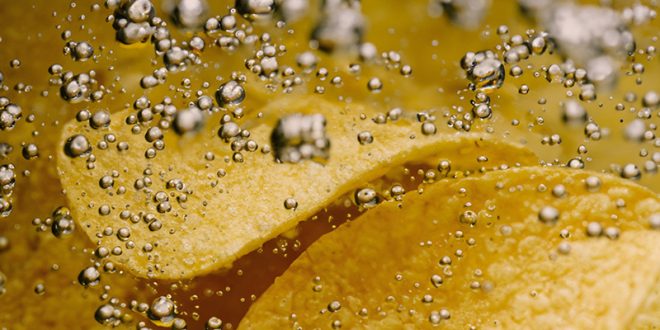
Parameters such as oil quality, frying temperature, and time – all influence oil absorption during deep-fat frying. The high temperature causes some of the water to evaporate, which then moves away from the food and through the surrounding oil. The food absorbs the oil, which replaces some of the lost water.
Since moisture removal during frying is a key factor for oil uptake of fried products, low temperature have significantly lower oil uptake than high temperatures. The determination of the exact instant the frying oil must be replenished is also a major concern for avoiding possible health risks.
During the frying process, oil is often recycled in several batches, allowing moisture and air to be mixed into the hot oil. As a result, these oils undergo thermal and oxidative decomposition, and polymers formed under these conditions are harmful to health. Spent frying oils may contain harmful concentrations of degradation products, and so, frying oil quality is key to food safety and consumers’ health.
Some of the current frying technologies incorporate continuous oil filtration systems to aid in the removal of particulate material left behind from sliced products during cooking. The oil is typically passed through a filtering system to remove both large and fine particles. If these particles are left in the oil, they continuously produce polymers and other polar compounds that cause an off-taste in the product and degrade the frying oil, affecting organoleptic properties such as crunchiness. The sooner and more accurately the particles are removed, the better the oil quality will be.
You can read the rest of this article in your complimentary e-copy of Issue 2 of Potato Business Dossier 2022, which you can access by clicking here.