

Frito-Lay to Introduce 700 Electric Delivery Vehicles in the U.S.
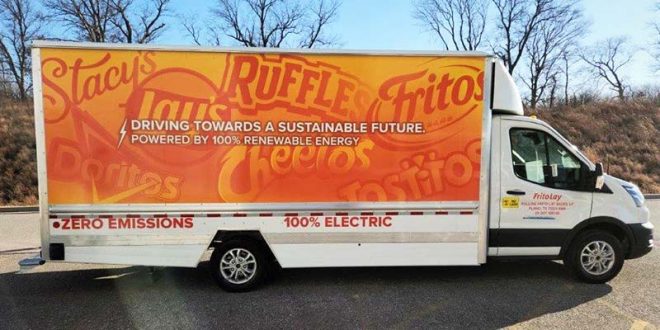
By the end of 2023, Frito-Lay will introduce approximately 700 electric delivery vehicles in the U.S., according to a recent announcement.
The usage of vehicles is anticipated to reduce emissions by 7,052 metric tons of greenhouse gases (GHG) per year, which is the same as removing 1,533 passenger cars from the road.
A crucial component in meeting the pep+ net-zero emissions target by 2040 is the nationwide introduction of zero- and near-zero emission cars.
The decision underscores the PepsiCo division’s strong success toward its PepsiCo Positive sustainability goals when combined with developments in regenerative agriculture, water conservation technologies, packaging innovation, and more.
“From how our potatoes and corn are grown to how we make, transport, and sell our products, Frito-Lay will continue to leverage our scale to create real positive impact for people and our planet,” David Allen, vice president, and chief sustainability officer, PepsiCo Foods North America, mentioned.
To create sustainable long-term value and competitive advantage, PepsiCo Positive (pep+), a strategic end-to-end change, relies on Frito-Lay.
“The introduction of electric vehicles throughout our owned fleet and that of our partners is in direct support of our commitment to building a circular and inclusive value chain. At our Modesto, California, plant, we have reduced our greenhouse gas emissions by 91% from direct fleet operations, and we look forward to scaling that as we add electric vehicles throughout the country,” Laura Maxwell, senior vice president of supply chain at PepsiCo Foods North America, mentioned.
As a food company, Frito-Lay has a strong commitment to regenerative agricultural practices that seek to support farmer livelihoods, enhance soil health, lower carbon emissions, increase watershed health and variety, and improve watershed health.
Together, Frito-Lay and Quaker are designing all packaging to be recyclable, compostable, biodegradable, or reused by 2025 as the next step in their pep+ journey. The business recently unveiled its new, leading-edge Greenhouse Learning Center, which will examine how well packaging materials degrade in various settings.