

Enhancing the Potato Industry’s ROI in Sustainable and Regenerative Agriculture
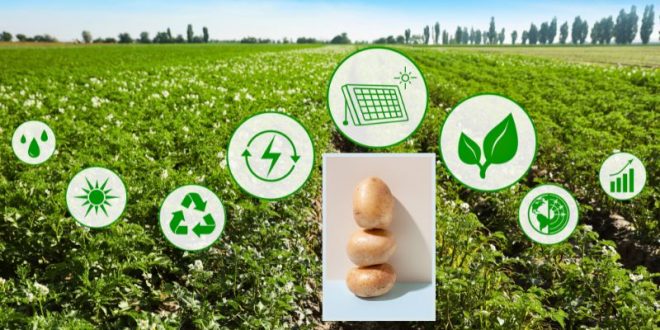
New potato cultivars are being developed to improve the industry’s return on investment (ROI) in sustainable and regenerative agriculture, while the Potato Sustainability Alliance (PSA) brings stakeholders together to collaborate and benchmark the benefits of water stewardship, soil health, and input management.
“There are so many wrinkles to sustainability and how to improve it. From a breeding standpoint, there are certain things we can control – resistance to certain diseases or not having to use pesticides as frequently. And cultivars can be bred for drought tolerance and limit the use of applied water while maintaining yields,” Jamie Suiter, Key Account Manager with HZPC Americas, a PSA member, said.
Netherlands-based HZPC worked with clients to identify five attributes – Marketable Yield, Fertilizer, Storability, Crop Protection, and Fresh Water Use – for some of their cultivars to help prioritize the performance of sustainable potato types. Every variety is bred with sustainability features that improve growers’ capacity to gauge and control inputs.
“When we talk about using fewer inputs, that includes fertilizer, chemicals, and water. It’s those three primary prongs of sustainability that every farmer, processor, and breeder is looking to accomplish. And any new varieties we look to introduce are trying to accomplish at least two of those three sustainability prongs,” Suiter added.
Extensive trialing on a macro and micro level in “real world” growing conditions is another important step in commercializing sustainable potato cultivars. But for sustainable varieties to gain traction with growers, Suiter says they will need to out-produce or out-value “traditional” varieties.
“There are different ways to evaluate sustainability ROI. It could be less waste. It could be a higher yield. It could be lower input usage. “There could be a variety with low chemical and water usage, but if it doesn’t produce, it’s not going to provide that overall value growers need,” Suiter also mentioned.
To assist farmers in selecting the best variety to meet their sustainability objectives, HZPC created an online tool that lets growers choose which market to target (fresh, French fries, chips), as well as how important each of the five sustainability qualities is (less, average, or more). A suggestion for a sustainable variety is then made to them.
“We’ve seen more dramatic swings in climate, regulated water usage, and restrictions on where and when chemicals are applied. The ability to pair a sustainable potato variety to growing conditions is going to allow farmers to stretch or save resources,” Jamie Suiter declared.
‘Future-Proofing’ Potatoes
While breeding sustainability traits into potato cultivars is gaining momentum, cross-breeding is another opportunity to make varieties more resistant to diseases and resilient in changing climates.
Genetically modified seeds have long been part of the corn and soybean growing cycle, but they have not been in potatoes. However, recent years have seen the development of tetraploid, diploid, and hybrid potatoes, which could modernize the traditional growing process and enhance sustainability.
Cross-breeding certain varieties can potentially strengthen disease, pest, and heat-resistant traits in future potato generations. Hybrid technology can allow potato breeders to increase per-plant production and improve nitrogen efficiency or starch quality.
While HZPC still traditionally breeds potatoes by crossing varieties (tetraploid), hybrid and diploid cultivars could further improve characteristics such as yield, disease resistance, taste, texture, and adaptability to different growing conditions.
Suiter says new breeding opportunities that safely and sustainably increase performance and production are evolving. But the ability to “future-proof” potatoes from the ground up aligns with production goals and consumer expectations.
“In the commercial potato value chain, customers at restaurants and grocery stores want sustainable products and potato varieties. Because of that demand, the value chain – from the field to the processing plants to the breeders – is becoming more sustainable today and in the future,” Jamie Suiter added.
Five Trends Shaping Sustainable Potato Production
Stakeholders throughout the potato production industry are working to define and prioritize the most valuable qualities to develop resilient, resistant varieties. Here are 5 trends emerging from ongoing research and development of sustainable potato varieties. Over the next few years, PSA will look for ways to incorporate these kinds of trends and metrics into its sustainability measurement, benchmarking, and reporting.
Disease Resistance: Potatoes are susceptible to various diseases, such as late blight and potato cyst nematodes. One of the primary trends in sustainable potato varieties is the development of disease-resistant cultivars to reduce the need for pesticides without sacrificing yield.
Reduced Carbon Footprint: Some potato varieties are being selected or bred for their ability to sequester carbon in the soil, contributing to carbon sequestration and reduced greenhouse gas emissions.
Drought Tolerance: With changing climate patterns and increased water scarcity or restrictions in some regions, there is a growing focus on breeding potato varieties that can thrive in drought conditions and conserve water.
Market Demand: Consumer demand for sustainably grown and locally sourced foods is driving the adoption of sustainable potato varieties. Farmers respond to this demand by cultivating potato varieties well-suited to their local ecosystems and market preferences.
Collaborative Research: Collaboration between public and private institutions, as well as international partnerships, is playing a crucial role in developing and disseminating sustainable potato varieties.