


Climate Control In Potato Storage: System Integration, Forecast Logic, And Operational Risk
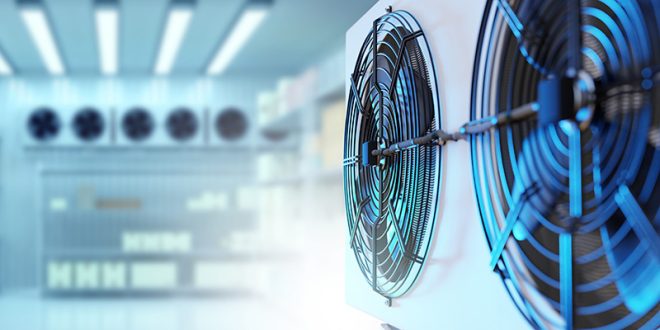
Climate control is the point at which raw material quality is either preserved within processing specification or irreversibly degraded. Deviations in temperature, humidity, or airflow do not remain confined to the store. They translate into sugar accumulation, fry color variability, weight loss, and ultimately reduced processing yield.
The operational requirement is therefore not to maintain a target climate, but to maintain consistent crop condition across thousands of tonnes over extended storage periods.
Traditional climate computers addressed this requirement by automating fans, cooling units, and dampers against fixed setpoints. Current systems are evolving beyond that model. Suppliers are now positioning storage control as an integrated decision environment, combining sensor data, predictive logic, and system-wide coordination to determine when, how, and at what cost climate interventions should occur.
From Climate Computers To Integrated Control Platforms
One of the clearest indicators of this transition is how suppliers now define their systems. Omnivent describes its OmniCuro platform as a system that “monitors, analyses, controls and advises,” while enabling remote access via mobile and desktop interfaces. The system integrates ventilation, cooling, heating, and air distribution within a single control architecture.
With OmniCuro NEXT, the company moves further toward decision-based operation. According to Omnivent, the system allows users to “setup your storage strategy in minutes,” after which it “automatically takes the product to the next storage phase.” The implication is a shift in operator role: from continuously adjusting technical parameters to defining storage intent and supervising execution.
This repositioning reflects a broader industry trend. Climate control is no longer presented as a collection of automated components, but as a coordinated system designed to manage crop condition through different storage phases with minimal manual intervention.
Predictive Control And Weather-Driven Decision Logic
Tolsma-Grisnich’s Vision Control platform illustrates how predictive capability is being embedded into storage automation. The company describes the system as an “intelligent storage computer” that regulates temperature, relative humidity, and CO2 by controlling fans, hatches, heaters, and refrigeration systems.
The addition of the Weather in Control module extends this capability into forward planning. Tolsma-Grisnich states that the system uses a 10-day weather forecast and incorporates variables such as target storage temperature, energy tariff structure, and the presence of mechanical cooling to determine when ventilation or refrigeration should be activated.
This approach changes the timing of intervention. Instead of reacting to current conditions, the system evaluates future conditions and selects the most efficient operating window. In practice, this allows storage operators to use ambient air more effectively for cooling or drying when external conditions are favorable, while avoiding unnecessary mechanical cooling.
For large storage facilities, this represents a shift from control to optimization. The system is not simply maintaining climate conditions; it is selecting the most cost-effective and product-safe method of doing so.
Multi-Cell Coordination And Centralized Control
As storage facilities increase in size and complexity, the ability to manage multiple storage zones within a single system becomes critical. Mooij Agro addresses this through its Croptimiz-r platform, which the company describes as a controller capable of managing ventilation, heating, cooling, and humidification across multiple storage rooms.
The Croptimiz-r MAX system is presented as an “all-in-one control system” with centralized management of up to 16 storage cells. Complementary modules such as the Smart Cooling Manager enable coordination between cooling units and storage areas, ensuring that refrigeration is managed as part of the overall system rather than as isolated components.
This level of integration reduces the risk of conflicting actions, such as simultaneous heating and cooling or uneven airflow distribution between storage zones. It also enables consistent control strategies to be applied across the entire facility, rather than relying on individual adjustments at unit level.
Remote Access, Data Visibility, And Traceability
Modern storage platforms also extend beyond real-time control into data management. Agri-Stor’s Agri-Star system is described as internet-enabled and accessible via mobile devices, allowing operators to monitor and adjust storage conditions remotely.
The system includes graphing and reporting functions that provide historical visibility of storage conditions. This capability is increasingly relevant in a processing context, where storage is not only an operational step but also part of a documented quality chain.
The ability to track temperature, humidity, and CO2 profiles over time supports root-cause analysis when quality issues arise. It also enables comparison between storage seasons and refinement of storage strategies based on measured outcomes rather than assumption.
CO2 Management As A Targeted Control Layer
While full-platform systems are expanding in scope, specialized technologies continue to address specific storage challenges. CO2 management is one of the most prominent.
AHDB notes that modern storage systems increasingly use CO2 sensors to measure store atmosphere and automatically trigger ventilation when required. This approach allows operators to manage respiration-related gas accumulation more precisely, reducing reliance on continuous ventilation.
Specialist providers such as Restrain focus specifically on this aspect. Their systems are designed to control CO2 levels by activating extraction only when thresholds are exceeded, minimizing unnecessary air exchange and associated energy loss. Within integrated storage systems, such modules function as targeted control layers rather than standalone solutions.
Failure Mode: Sensor Drift And Measurement Error
As automation becomes more central to storage operation, the reliability of measurement systems becomes critical. Vaisala emphasizes that humidity measurement in industrial environments requires regular calibration and highlights the interdependence of temperature and relative humidity.
The company states that “a difference of only 1 °C between the temperature of the measurement point and the temperature of the sensor can cause an error of 3% RH at 20 °C and 50% RH, and 6% RH at saturation.” In high-humidity storage environments, such deviations can directly affect control decisions.
Vaisala also notes that condensation and contamination can affect sensor accuracy and longevity, particularly in environments where high humidity is maintained over extended periods. In potato storage, where humidity control is essential to limit weight loss and maintain tuber quality, such measurement errors can result in inappropriate ventilation or cooling actions.
Read the rest of this feature in the free e-copy of the March/April Issue of Potato Processing International, which can be accessed by clicking here.