

Augmented Reality Improves Productivity and Efficiency in Agriculture
With practical applications, augmented reality (AR) technology is upending several sectors. In addition to raising production across the agribusiness value chain, AR’s hands-free data visualization enhances the effectiveness and efficiency of agricultural training through simulations or real-time guidance.
In light of this, companies will continue to use augmented reality (AR) in the years to come, but high upfront costs and little funding will prevent broad acceptance in the near run, predicts GlobalData, a top provider of data and analytics.
According to the “Augmented Reality in Agriculture” Thematic Intelligence research from GlobalData, the AR industry is expected to reach USD100bn by 2030, up from USD22bn in 2022.
“Until the last few centuries, the agriculture sector operated in more or less the same way for millennia. However, the fourth agricultural revolution brings new challenges for farmers to worry about – especially around limited agricultural resources. Agriculture must use the emerging technologies to improve efficiency and sustain our growing population with limited land and labor without worsening climate degradation,” Aoife McGurk, Associate Thematic Intelligence Analyst at GlobalData, commented.
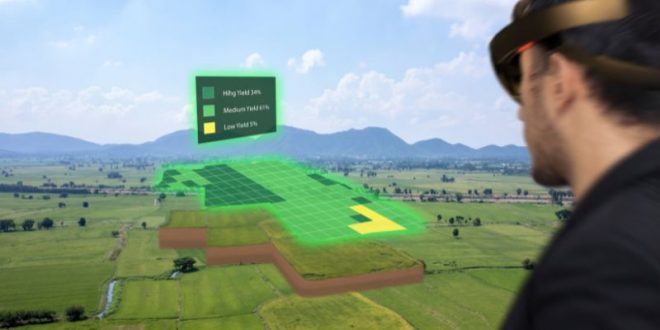
AR has the potential to improve precision agriculture, speed up equipment repairs by professionals, and simplify training on farms. The key to augmented reality’s utility in agriculture is its ability to see data hands-free, giving farmers access to knowledge and insights without interrupting other duties. This might help farmers maximize the efficiency of their resources and raise the productivity of all agricultural laborers.
“The use of AR for agricultural training is slowly growing, teaching farm workers to detect disease in crops and livestock and assisting technicians with repairing and maintaining agricultural machinery. The next frontier for AR in farming is precision agriculture,” McGurk continued.
The ability to visualize highly specific information about individual plants and animals, all completely hands-free, will be invaluable to the sector in the coming years.
“AR-enhanced precision agriculture can minimize the pollution and resource waste associated with agrochemicals and irrigation. By overlaying insights about crop health onto the physical world, AR assists farmers in ensuring these scarce resources are applied prescriptively. This prescriptive use of agricultural resources will be key in meeting the growing demand for food while minimizing environmental and climate degradation. In the long run, this will alleviate the looming threats of climate change, environmental degradation, and pressure on limited resources. AR has huge potential in the agriculture industry. However, lack of knowledge, limited investments, and initial high costs are bound to hinder its widespread adoption in the short-term,” McGurk concluded.