


KTH Study Identifies Peptide Route To Target Potato Late Blight
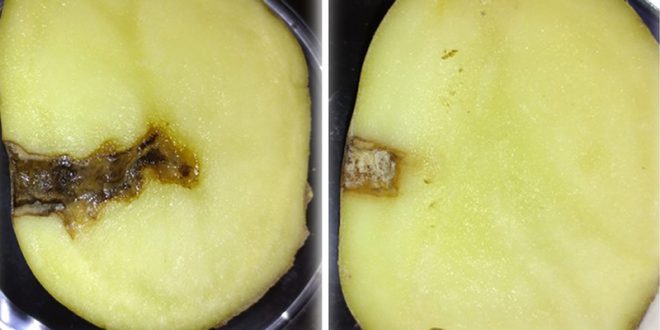
Researchers at KTH Royal Institute of Technology have reported progress in developing a targeted approach to controlling potato late blight, the disease caused by Phytophthora infestans and historically associated with Ireland’s Great Famine.
The study describes the synthesis of a peptide, CS5, designed to attack P. infestans without harming plants. The work was carried out by KTH researchers in collaboration with the University of Milan in Italy, Flinders University in Australia, and the Indraprastha Institute of Information Technology in India.
Late blight remains one of the most destructive diseases affecting potato and tomato crops. According to KTH, climate change is increasing humidity and rainfall patterns that favour the spread of the pathogen, widening the conditions under which infections can develop.
“Regions that once saw late blight only sporadically – from cool highlands to temperate fringes – are now experiencing longer, more intense infection windows as seasons become warmer and wetter,” said Vaibhav Srivastava, a glycoscience researcher at KTH. “At the same time, more diverse and aggressive P. infestans populations are exploiting these new niches, challenging spray calendars and resistance strategies that were designed for yesterday’s climate.”
The researchers focused on the pathogen’s biology. Although P. infestans is often described as a water mold, it belongs to the oomycetes, a group more closely related to algae than to fungi. Oomycete cell walls are mainly composed of cellulose and related complex sugars, with little or no chitin.
KTH said the study shows that the enzyme PiChs produces specific chitin fragments and that blocking it slows the pathogen’s growth and ability to infect plants. CS5 was designed to bind to this enzyme.
“CS5 is designed to match and bind to this singular enzyme,” Srivastava said.
In laboratory tests, CS5 blocked the enzyme’s activity and slowed or stopped pathogen growth. It also prevented infection in treated potato samples. According to Srivastava, the peptide poses no threat to plants or humans because the specific chitin synthase enzyme it targets is not present in either.
“We’ve shown that this pathogen depends on a specific internal process to grow—and that a specially designed peptide can switch it off,” he said. “This gives us a completely new way to fight late blight. It also works alongside existing methods and could help farmers slow the rise of resistance while relying less on chemical sprays.”
KTH said CS5 and related compounds could form the basis for environmentally friendly crop protection tools, either alone or in combination with other targeted treatments. The researchers also said the findings could support the development of comparable peptide-based controls against other economically damaging oomycete pathogens.