Successful Completion of Austrian Potato Variety Trials
The Accelerated Development of Multiple-Stress TolerAnt PoTato (ADAPT) project, part of the EU’s Horizon 2020 program, is being worked on by Europatat and intends to create innovative methods for preparing potatoes for the demanding future growing environments.
Similar to this, spud variety testing requires innovative approaches to recognize and comprehend the tolerance of various kinds and to assist farmers in their variety selection. The Austrian potato variety trials’ first year was completed in 2022.
To suggest improvements to traditional VCU techniques, the Austrian Agency for Health and Food Safety (AGES) and the Austrian potato breeding business NOES (N Saatbaugenossenschaft GmbH) undertook field testing with a few selected varieties in 2022.
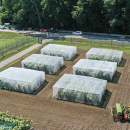
In Austria, the same 16 potato types were planted in four separate areas, several of which experienced extreme drought in 2022. The field trials were conducted in part in organic farming settings to reflect the significance of the organic industry in Austria and the EU.
The main potato-growing regions of Austria were home to all of the field testing locations. The predominant characteristics of these regions were low yearly precipitation, hot, dry summers (Pannonian climate), and one trial location had more precipitation and a maritime-continental climate. Depending on the site, potatoes were sown in April 2022 and harvested in August or September. Each variety was grown in four replicate plots in each of the five trials to produce a sufficient number of samples for valid inferences about abiotic stress tolerance.
The aim in choosing the 16 cultivars was to reflect a broad spectrum of abiotic stress resistance, from tolerant to vulnerable. In addition, the ADAPT field experiments in Spain and the Netherlands are testing the drought and heat tolerance of eleven cultivars obtained from ADAPT potato breeders HZPC, Solana, Meijer, and NOES. Five additional NOES types were chosen for inclusion based on their potential stress tolerance and adaptation to Austrian environmental conditions.
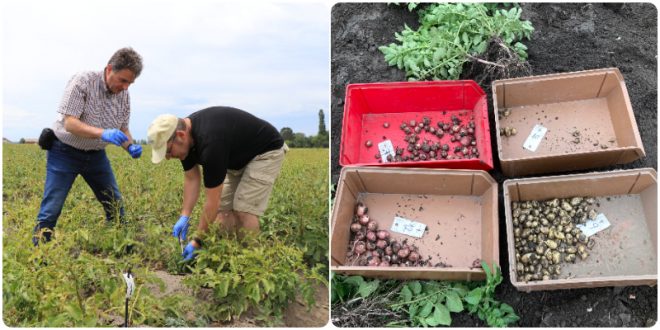
Different technological methods, including irrigation, drone flights, environmental sensors, tuberization process assessment, and RNA and molecular analysis, were used in conjunction with a phenotypic evaluation of the varieties to identify relevant characteristics associated with potato response to abiotic stress.
At this time, AGES is processing data from field experiments, including data on potato yield, potato quality, data from drones, and data from environmental sensors. At the University of Vienna and NIB, RNA sequencing and molecular analysis are also undertaken. The Austrian variety trials from 2022 will be validated in 2023 using the same trial strategy.