

The European Potato Harvesting Conditions are ‘Very Difficult’
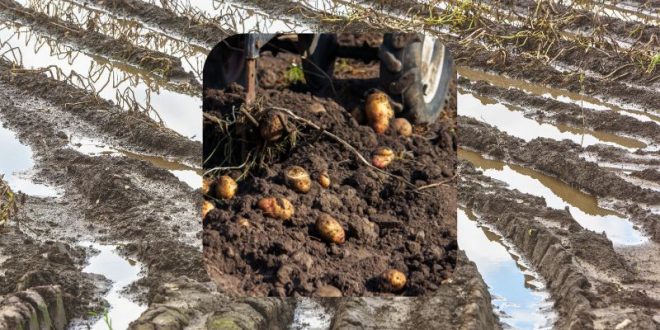
In Europe, the conditions for harvesting potatoes are quite harsh, and the process of lifting potatoes is extremely laborious.
“It is now confirmed that 5%+ of the seed crop in The Netherlands is still in the ground. There are also seed of late varieties still to lift in Germany. Recent estimates suggest that 20% of the total crop is still in the ground in The Netherlands and that it will take a week to ten days of dry weather before conditions are dry enough for any work. In Germany, France, Belgium, and Holland combined there are still around 3.5 to 4m tonnes to lift. Much of this is in coastal areas where there has been heavy rainfall again over the last two days,” the latest IFA potato report reveals.
Irish potato retail sales and home consumption are still strong. This week’s dryer weather might create an opportunity for some harvesting, but the going is still quite difficult. There have been reports of below-average yields and above-average waste from cracks. Market rates are a good indicator of what potatoes are currently available in stores.
The Irish Teagasc also mentions that the progress made in terms of the potato harvest in 2023 remains very slow.
According to the same specialists, a lot of soils are wet, which results in poor trafficability and slow harvesting. Harvesters typically move at a speed of 1-2 km/h, therefore it will inevitably take longer to finish the harvest.
“There have also been many reports of soft and pink rots in crops, especially where the water table was high,” they say.
The Irish potato growers are being strongly advised to store high-risk areas, e.g., tramlines and wet headlands, in separate boxes and leave them near a door where they can be accessed quickly if needed.
“When taking samples to test for damage, growers should make sure to take them from different steps along the process including the lifting shares, from the different webs on the harvester, and different depths within the boxes. This will give a clearer insight into where damage is occurring during harvest which can then be addressed. This will need to be completed daily and especially when moving from one crop to another,” the Irish advisors mentioned.