

USD3m Aroostook Farm Upgrade Positions Maine at Forefront of Potato Research
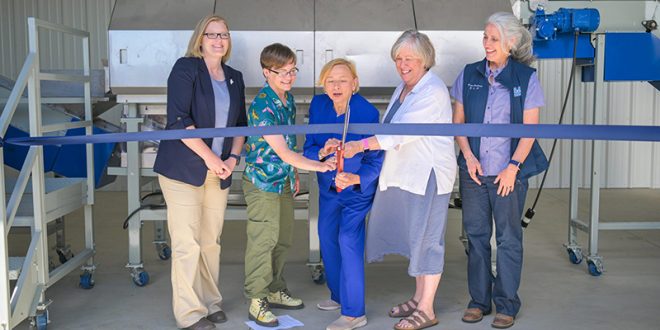
The University of Maine (UMaine) has unveiled a $3 million upgrade of its Aroostook Farm research facility, positioning the state as a leader in advanced potato breeding and agricultural innovation. Governor Janet Mills joined UMaine President Joan Ferrini-Mundy and leaders from the Maine Potato Board on July 18 for a ceremonial ribbon cutting to mark the reopening of the newly modernised site.
The renovation, funded under the Maine Jobs and Recovery Plan (MJRP), is designed to accelerate the development of new potato varieties tailored to climate resilience and market demand. The initiative builds on UMaine’s legacy of research breakthroughs such as the Caribou Russet, which has become Maine’s most widely planted seed potato variety.
“For over a century, Aroostook Farm has driven innovations that sustain Maine’s potato industry. These investments ensure we can deliver the next generation of high-quality, disease-resistant potatoes that keep Maine competitive globally,” said Ferrini-Mundy, who also serves as Vice Chancellor for Research and Innovation for the University of Maine System.
Driving Innovation in Potato Research
Originally established as part of the Maine Agricultural and Forest Experiment Station (MAFES), the 425-acre Aroostook Farm plays a critical role in testing and advancing potato genetics. The newly installed technology suite includes DNA phenotyping tools, optical sorters, advanced sensors and imaging equipment, as well as drones capable of monitoring nearly 6,000 test plots. These capabilities are expected to shorten the typical 10–12-year breeding cycle required to bring a new potato variety to market.
“The modernization of Aroostook Farm made possible by the Maine Jobs and Recovery Plan will be a game-changer for the state’s potato industry,” said Diane Rowland, Dean of UMaine’s College of Earth, Life, and Health Sciences and Director of MAFES. “With these tools, we can deliver varieties more quickly and with greater certainty, ensuring processors and consumers have access to premium Maine potatoes.”
The renovation also converted a former potato storage building into a cutting-edge laboratory, equipped to measure sugar content and other key traits critical to potato quality.
Building the Workforce of the Future
The Maine Jobs and Recovery Plan, which allocated $35 million to the University of Maine System, is aimed at strengthening the state’s natural resource industries and preparing a skilled workforce. A portion of the funds is supporting internships for students across UMaine campuses, providing hands-on experience in agricultural research and innovation.
“With tools like drones flying over thousands of test plots, students can evaluate which potato varieties resist pests, diseases and weather extremes,” Governor Mills said at the ceremony. “This is exactly the type of forward-looking investment we envisioned to build Maine’s economy of the future.”
The Maine Potato Board, a key partner in the project, praised UMaine’s efforts to support growers and producers. “These investments will help develop the next Caribou Russet more quickly and train the next generation of researchers necessary for our industry to adapt and thrive,” said Jeannie Tapley, Executive Director of the Board.
Aroostook Farm’s upgrade is the first of four major MJRP-funded capital projects for UMaine focused on natural resource innovation. Construction continues at the Orono campus on facilities dedicated to aquaculture, green engineering, and food innovation.