

Wild Potato Genome Unlocks Cold Resistance Blueprint for Future Cultivars
Researchers from Huazhong Agricultural University have successfully assembled a high-quality, haplotype-resolved genome of Solanum commersonii, a wild potato species renowned for its ability to withstand extreme cold. The landmark study, published in Horticulture Research on July 12, 2024, provides a critical genomic foundation for future breeding of cold-tolerant cultivated potatoes (Solanum tuberosum), a crop still highly vulnerable to frost damage.
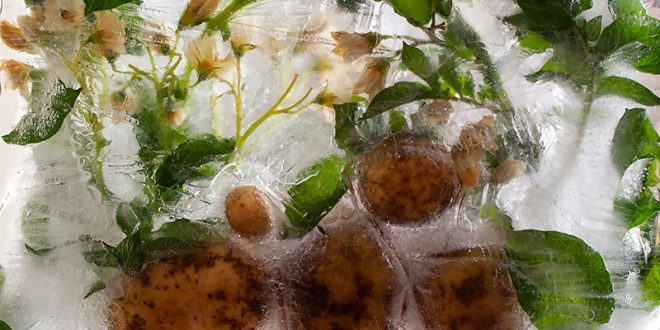
Unlike its cultivated counterpart, which suffers growth inhibition below 7°C and tissue death below -3°C, S. commersonii is capable of surviving temperatures as low as -12°C. However, despite its exceptional resilience and resistance to multiple pathogens, the species has remained underutilized in breeding programs due to its genomic complexity and the lack of high-resolution reference resources.
To address this gap, the research team employed a combination of PacBio HiFi long-read sequencing and Hi-C chromatin conformation capture, assembling two complete chromosome-level haplotypes—CMM5_Hap1 and CMM5_Hap2—measuring 706.48 Mb and 711.55 Mb, respectively. Both assemblies achieved over 94% chromosome anchoring, with contig N50 values exceeding 45 Mb and BUSCO completeness above 98%, setting a new standard for wild potato genomics.
The researchers also conducted comparative genomics to identify gene families under positive selection. Notably, 1,581 genes displayed signatures of evolutionary adaptation, particularly in pathways associated with hormone metabolism, cellular development, and abiotic stress responses—underscoring the species’ cold-hardiness and pathogen resistance.
Crucially, the team identified a major quantitative trait locus (QTL) linked to freezing tolerance on chromosome 7. By developing a BC1 mapping population from a cross between S. verrucosum and S. commersonii, and evaluating 276 individuals using electrolyte leakage assays at −4°C, the researchers narrowed down the QTL to a 1.25 Mb interval between markers SSR179 and Ind88. This locus, encompassing 88 candidate genes, accounts for 18.81% of phenotypic variation in freezing tolerance. Marker validation also ruled out false-positive signals on chromosomes 10 and 12.
“Our high-quality genome assembly and precise QTL mapping provide essential resources for unraveling the genetic basis of cold tolerance in potatoes,” said Prof. Xingkui Cai, corresponding author of the study. “The identified locus on chromosome 7 is particularly promising for future gene cloning and marker-assisted breeding. This work significantly accelerates the integration of wild resistance traits into cultivated potato lines.”
The significance of this work lies in its dual outcome: it offers both a detailed genome map and a confirmed target region for trait improvement. The chromosome 7 QTL provides a concrete entry point for cloning cold-resistance genes and advancing molecular breeding strategies. As climate variability increasingly threatens global crop production, introducing stress-resilient traits into mainstream potato varieties is becoming a priority.
By leveraging S. commersonii’s genetic adaptations, breeders may now be better equipped to develop potato cultivars capable of withstanding sub-zero temperatures, potentially extending the crop’s cultivation range into cooler environments and helping stabilize yields amid increasingly erratic weather patterns.