

Zero Tillage Potato Production Through Rice Straw Mulch Gains Pace Thanks to CIP

Collaborating with the Fund for the Promotion of Innovation in Agriculture (i4Ag), the International Potato Center (CIP) and partners have unveiled the “Zero Tillage Potato Production through Rice Straw Mulch (PZTM),” a ground-breaking initiative.
This revolutionary project heralds a more affluent and environmentally conscious future by introducing a novel and sustainable method of potato growing, providing a life-changing experience for farmers.
In addition to being implemented in Bangladesh, India, and Peru, the PZTM project tackles several issues that potato farmers in these countries deal with, such as water scarcity, land degradation, and the effects of climate change. In several agricultural regions of India, for instance, the lives of smallholder farmers and food security have been jeopardized by the current methods of soil preparation, which are frequently typified by over-exploitation and unsustainable approaches.
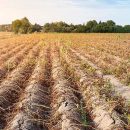
But PZTM’s novel strategy is about to alter the rules. Potatoes are planted directly into undisturbed soil without the need for conventional soil preparation, and once rice is harvested, they are covered with rice straw. By allowing potatoes to grow inside the rice straw, this innovative technique does away with the need for tillage and ushers in a more productive and ecologically friendly agricultural practice.
This innovative method offers jobs and more revenue for farmers in Mondulkiri province, Cambodia, where potatoes are grown mostly. To research potato cultivars most suited to Cambodian soil, the Royal University of Agriculture created a USD200,000 potato research center in 2019. Although the nation is now importing more than 5,000 tonnes of potatoes per year, its reliance on imports is expected to decline as a result of its efforts to increase potato production.
The study results show that, in comparison to standard planting techniques, direct seeding has no discernible effect on production or quality. There are extensive benefits from this innovation. By exploiting the moisture left over after rice is harvested, zero tillage extends the potato growing season while improving soil fertility and carbon storage. It also makes it possible to grow potato cultivars that take longer to mature. Additionally, using rice straw as mulch lowers the need for dangerous agrochemicals, conserves water, and inhibits the growth of weeds, pests, and illnesses.
The PZTM initiative addresses climate change, promotes sustainable agriculture, and lowers poverty in line with the Sustainable Development Goals (SDGs) of the UN, Khmer Times wrote. It emphasizes the value of agroecological and sustainable intensification, providing agricultural communities in India and elsewhere with a more promising and sustainable future. This creative method of potato farming is being embraced by Cambodia and other nations, which is a big step toward a more lucrative and ecologically sensitive agricultural landscape.