

Kazakhstan to Host Central Asia’s Largest Snack Plant as PepsiCo Doubles Down
PepsiCo will significantly expand its investment in Kazakhstan by more than doubling its initial commitment to build what is set to become the largest snack production plant in Central Asia. The expanded facility, located in the Almaty Region, will triple the site’s processing capacity and help establish a localised value chain for potato-based products in the country.
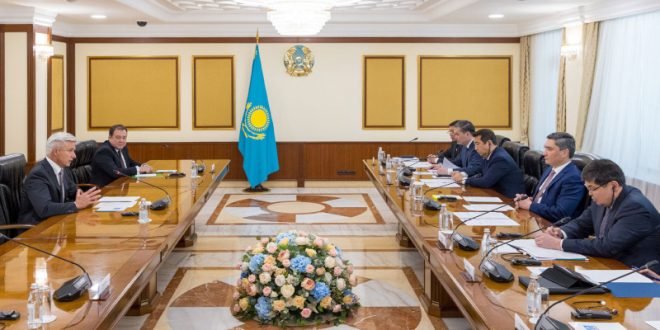
The increased capital injection was announced during a meeting on May 20 between Kazakhstan’s Prime Minister Olzhas Bektenov and David Manzini, President of PepsiCo for Central Asia, Russia, Belarus, and the Caucasus. Initially projected at USD 160 million following negotiations in mid-2024, the investment is now set to exceed that figure, according to the Kazakh Prime Minister’s press service.
Production capacity at the site will rise from 70,000 to 210,000 tonnes of processed potatoes annually, enabling the output of nearly 70,000 tonnes of finished snacks per year. Construction is already underway, with the first production batch scheduled for March 2026. The facility is expected to operate at full capacity by September 2027.
Local integration and agricultural development
The facility is central to PepsiCo’s strategy to localise its supply chain in Kazakhstan. “By 2035, PepsiCo aims to fully localize the cultivation of potato varieties used for chips,” the Prime Minister’s office noted. Currently, around 15 farms across the Pavlodar, Akmola, Karagandy, Almaty, and Zhetisu regions are supplying raw potatoes for the project.
Manzini emphasised the strategic value of Kazakhstan for the group’s regional growth ambitions. “We see high potential in the country, which is why we have decided to double our investments,” he stated, noting that the government had created favourable conditions for foreign investment.
Speaking at the meeting, Prime Minister Bektenov pledged swift institutional support: “We will fully support such projects aimed at producing finished products with high added value. Government agencies will make all the necessary decisions within two weeks.”
The investment is expected to create around 900 new jobs, and PepsiCo has also committed to expanding raw material storage capacity while developing scientific methods to boost crop yields and quality.
Strategic alignment and future prospects
The meeting between Manzini and Alibek Kuantyrov, Kazakhstan’s Deputy Foreign Minister, further underlined the strategic alignment between PepsiCo’s regional ambitions and Kazakhstan’s national priorities.
“We see PepsiCo’s projects as a significant contribution to the development of Kazakhstan’s processing industry. Increasing value-added production, advancing contract farming, and developing export-ready products align with our national strategic priorities,” said Kuantyrov. “The government is ready to provide comprehensive support for the continued implementation of the company’s investment plans.”
Both parties agreed to maintain close cooperation to ensure timely delivery of the project and explore additional areas for partnership.
In a prior interview with The Astana Times, Manzini highlighted Kazakhstan’s role in the company’s broader Central Asian strategy, pointing to the country’s “economic and geopolitical stability” as critical enablers for long-term investment.
With this expanded initiative, PepsiCo not only strengthens its footprint in Central Asia but also supports the region’s food processing infrastructure and agricultural development.