

Urschel Broadens Market Reach Through Foodservice-Focused Chicago Showcase
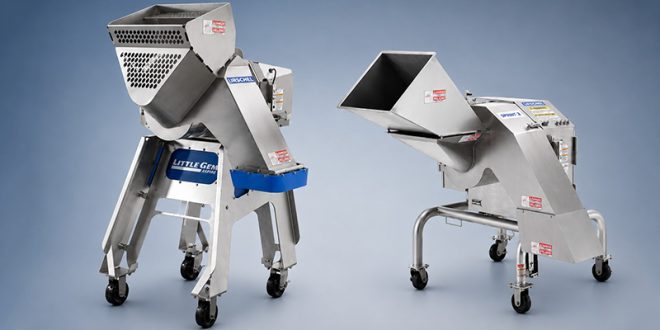
From May 16–19, 2026, at McCormick Place, Urschel’s Booth 2448 will showcase a portfolio that extends beyond traditional industrial processing and directly addresses foodservice priorities such as labor efficiency, operational consistency, space optimization, and scalable preparation. The lineup includes the Little Gem Aspire Dicer, Sprint 2 Dicer, KRONEN GS 10-2 Slicer, KRONEN KS-100 PLUS Centrifuge / Dryer, and additional KRONEN manual and automatic systems.
The strategy reflects a targeted move toward a customer base increasingly under pressure to improve back-of-house productivity while managing labor shortages, menu complexity, and preparation consistency. By presenting multiple cutting, slicing, and drying technologies within a foodservice context, Urschel is aligning itself with operators seeking integrated preparation systems rather than standalone equipment.
At the center of the exhibit is the Little Gem Aspire Dicer, a new Urschel cutting concept designed for fruit and vegetable processing. Engineered with a small footprint and low total cost of ownership, the machine produces slices from 2 mm to 20 mm, along with strips and dices up to 20 mm. Its compact design and space efficiency indicate clear relevance for foodservice operations where production capacity must often coexist with tighter kitchen or prep-area constraints.
The Sprint 2 Dicer adds a continuous production element, offering uninterrupted 2- or 3-dimensional cutting with configurable outputs including dices, strips, and granulations. Urschel’s decision to demonstrate the machine with a crinkle cut setup also suggests an emphasis on menu versatility and presentation, factors particularly relevant for restaurant and prepared-food operators.
Through KRONEN’s GS 10-2 Slicer and KS-100 PLUS Centrifuge / Dryer, Urschel broadens the proposition from cutting alone to a more complete prep workflow. The GS 10-2’s multifunctionality across slicing, dicing, shredding, and grating, combined with sanitary design and compact footprint, supports foodservice businesses balancing throughput with hygiene and space constraints. Meanwhile, the KS-100 PLUS addresses post-wash efficiency by reducing draining times and supporting integration into larger prep lines, an operational advantage for businesses processing fresh produce at scale.
This broader exhibit strategy suggests Urschel is not simply marketing machinery, but targeting a larger share of foodservice capital investment by framing its portfolio around productivity, process control, and operational standardization.
For a company historically associated with high-capacity industrial food cutting, the National Restaurant Association Show provides access to a wider ecosystem of restaurant chains, institutional foodservice providers, and hospitality operators. That positioning may prove increasingly important as suppliers seek growth in sectors where automation, labor substitution, and prep consistency are becoming strategic purchasing drivers.
By tailoring its message around “improv[ing] restaurant operations with efficient, precision cutting at high-capacity production,” Urschel is effectively using the event as a business development channel to diversify market exposure and strengthen its relevance in the evolving foodservice equipment landscape.