

2025 In The Rear-View: How Shifting Trade, Capacity, And Compliance Will Shape The Potato-Processing Market In 2026

Europe’s potato processors are exiting 2025 with a mix of operational resilience and commercial pressure. Dutch plants ran steadily through the autumn, yet Northern Europe’s traditional export engines encountered tougher lanes—especially to the UK and across Asia, where India and China expanded their frozen-fries footprint. North America’s structure remains a source of stability, with Canada’s exceptionally high processing share anchoring volumes and value.
In policy, the WTO’s late-October ruling in the EU–Colombia fries dispute is set to force a rapid reset in 2026, removing a persistent trade drag.
Netherlands: Solid Factory Rhythm, Harder Exports
On the factory side, 2025 closed with the Netherlands still demonstrating reliable throughput. In September, Dutch processors used roughly 302 thousand tonnes of raw potatoes to produce around 141 thousand tonnes of par-fried fries and 25 thousand tonnes of other potato products, a conversion ratio consistent with seasonal norms. The monthly series confirms that line utilization remained firm into the harvest window rather than collapsing under price or demand shocks—a useful indicator for capacity planning and raw procurement going into Q1.
Export dynamics, however, were more nuanced. Market commentary and data analyses through the year point to intensified competition from Asia—specifically from Chinese and Indian exporters—into destinations that used to be reliable for Benelux shippers, such as Japan, the Philippines, Thailand and other Southeast Asian markets. That does not imply a uniform retreat for Dutch exporters; rather, 2025 looked like a year where lane selection mattered more than usual. Plants that were able to flex volumes toward resilient demand in the Americas or within a subset of EU-27 neighbors found it easier to preserve line time and margins. The headline for 2026 in the Netherlands is therefore not about capacity risk; it’s about commercial agility and portfolio management in a more crowded global marketplace.
Belgium And The UK: A Big Numbers Reminder
One datapoint that framed 2025 discussions about British demand came via VLAM’s market communications: Belgium shipped just under 500,000 tonnes of potatoes to the UK in 2024 (primarily frozen products). That figure is important context for 2025 because it highlights the sheer scale of the UK as a buyer—and how even moderate year-on-year changes in British intake can ripple back through Benelux processors’ order books. For editorial accuracy, it’s also a reminder that apparent “losses” in one lane must be measured against multi-year baselines: the UK remains a volume anchor. In 2026, watch for UK buyers to keep trading off price, quality, and reliability under persistent inflation headwinds and freight normalization—conditions that favor efficient, multi-plant suppliers with credible service levels.
Germany: Demand Mix Signals
While Germany’s official statistics offer a precise view over longer intervals, 2025’s clearest take-away for planners was the apparent divergence between demand for traditional fries and thinner orders for certain snack formats. Several industry monitors reported firmer momentum in fries than in chips through H1, a pattern consistent with household trade-downs and away-from-home normalization at value-oriented operators. For 2026, treat that as a provisional signal rather than a permanent shift: energy prices, sunflower/palm oil spreads, and retail promotional calendars will still steer snack SKU rotations quarter by quarter. Where it matters is in plant-level SKU scheduling, packaging line flexibility, and procurement hedging rather than in any structural repositioning.
Canada: Structure As An Advantage
Canada’s processing structure was once again a pillar of stability in 2025. Roughly 68% of the 2023 Canadian potato crop went into processing (with fresh and seed representing the balance), one of the highest processing ratios among major producers. The export profile is correspondingly concentrated: processed potato products—chiefly frozen fries—dominate Canada’s outbound value. Those facts remained true as 2024/25 unfolded, and they set the baseline for 2026 capacity and contracting. For European readers, this is a useful counterfactual: where Benelux depends on complex cross-border sales portfolios, Canada leans on an integrated processing ecosystem tightly wired to North American demand centers. The implication for 2026 is that Canadian plants will continue to run with relatively predictable raw intake and outbound flows, while currency and freight will do most of the work in smoothing marginal competitiveness.
Oceania: New Zealand’s Export Pulse Reappears
New Zealand’s processed-potato export reports throughout 2025 pointed to a gradual recovery in volumes and unit values. Monthly reporting by Potatoes NZ showed a consistent year-to-date lift in outbound tonnes versus 2024 during mid-year, with the organization’s standard tables (tonnage, value, average $/t) reflecting healthier logistics and improved order books from regional buyers. Beyond the headline of “up year-to-date,” the important 2026 angle is the sustainability of mix: which SKUs (cut styles, coatings, par-fried specs) saw the stickiest gains, and how that aligns with fryer capacity settings and oil management across New Zealand plants. Readers planning 2026 supply should align SKU demand signals with fryer program changeovers and pack-line availability—small mis-timings can erode the margin benefits of better export pricing.
Asia: China And India Move Up The Table
Perhaps the most consequential competitive story of 2025 was the acceleration of Chinese and Indian frozen-fries exports into Asia and parts of the Middle East. Multiple trade monitors chronicled China’s growth into top-10 exporter status and India’s step-up, with lanes into Japan, the Philippines, Thailand, Indonesia, Malaysia and Gulf markets showing renewed activity. Two dynamics are at work here for 2026 planning. First, production cost deltas—labor, energy, cold-chain, and currency—continue to enable sharper pricing on certain specs and pack sizes. Second, regional proximity and trade agreements reduce landed-cost variability, allowing Asian buyers to allocate more volume to nearer suppliers without sacrificing continuity. For European processors, this is not a binary “in or out” market condition; it’s a prompt to differentiate through cut quality, coating technology, frying performance, and service, while choosing battles on lanes where European reliability and food-safety credentials still command a premium.
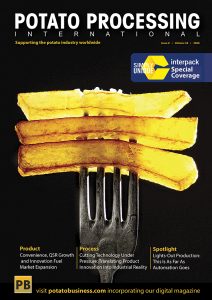
Read the rest of this feature in the free e-copy of the November / December Issue of Potato Processing International, which can be accessed by clicking here.