


Innovations and Investments for a Better Spud Post-harvest Storage
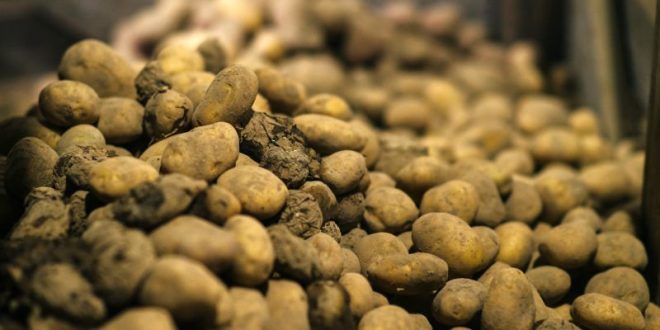
Before storing potatoes, it is critical to understand the eventual market and the specifications that the market requires. Specifications will be determined by a variety of quality indicators, including skin finish, dry matter, fry color, and sugar content.
Crops must be evaluated against these parameters both before and during storage. The presence of rot and disease, as well as bruising damage, will invariably have a significant impact on both the storage outcome and the ability to meet customer specifications.
The potato tubers are usually stored for several months after their harvest, to meet the market demands throughout the year. This increases their marketability and generates an additional benefit for growers, processors, and consumers. The composition of the potato varies with the storage time and cultivar type. Generally, the respiration and evaporation rate increase during maturity and tuber storage. As a result, there is an increase in weight loss, an increase in peroxidase enzyme activity, and a drop in starch and ascorbic acid levels. Therefore, reducing sugars are created. As a response, changes in potato starch content, dry matter, and reducing sugars cause their nutritional quality to degrade over the storage period.
“Reducing sugar is an important indicator for evaluating the quality of raw material in the processing of potato industry. Excess levels of reducing sugars cause an unacceptable non-enzymatic brown color for fried products, due to the reaction between the reducing sugars and the α-amino groups of amino acids. Therefore, high reducing sugars in tubers are not suitable for processing,” the Spanish University of Vigo scientists said.
Facing the Challenge of Demand for High-quality Products
To maintain potato quality for the seed, fresh, and processing sectors, the industry has innovated and invested in better post-harvest storage. The acceptance of the tuber in fresh markets is mostly influenced by its exterior look, but also by its internal content, which is identified by destructive analytical techniques.
The amount of dry matter and reducing sugars are the main physicochemical parameters that determine the industrial yield, quality, and flavor of potato tubers. The most used conventional analytical techniques are colorimetric and titration measurement methods. In addition, the operators themselves based on their professional experience select the potato tubers by hand on the processing belt.
Accurate temperature monitoring of stored potatoes is critical for early warning of quality issues, preventing product deterioration, and maintaining correct storage temperatures for different markets. Crop temperatures should be as uniform as possible to minimize the risk of condensation. The more comprehensive and frequent temperature monitoring takes place, the better the chances of good store management.
Currently, the food industry faces the challenge of meeting the demand for high-quality products while monitoring much of the product in real-time and following the requirements of food safety and traceability.
You can read the rest of this article in your complimentary e-copy of Issue 3 of Potato Business Dossier 2022, which you can access by clicking here.