

Issues and Solutions in Heat Recovery

Gas-fired boilers are used in the majority of food industry activities such as frying, drying, sterilizing, and pasteurizing. The end output is only marginally improved by the total energy consumed in these boilers. A chance for heat recovery exists when the remaining portion is expelled along with hot exhaust fumes.
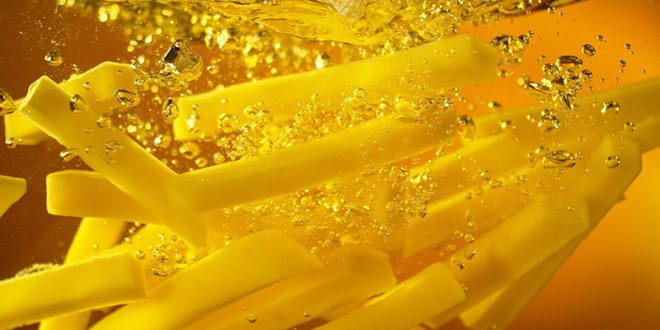
The situation can perhaps be explained most simply by using the example of frying potato chips. When making potato chips, frying consumes up to 90% of the total energy. The energy used for frying is then lost in the exhaust gasses in a percentage as high as 25%. This is because a potato must be dried out before it can be made into chips. An average potato chip has 80% water when it is placed in the fryer. The moisture level is normally only 2% after processing.
Exhaust is another source of empty calories because it contains substances like frying oil, volatile organic compounds (VOC), and odor particles. Empty calories are those that are consumed in large quantities to perform little to no actual labor. Before letting the exhaust into the air, these need to be taken out. The majority of the time, this is accomplished by using additional energy to remove undesirable exhaust particles.
The Issue and the Solution
The issue and the solution both involve the water that is present naturally in the substances. The water leaves the process as low-pressure steam as it evaporates. Water requires a lot of energy to evaporate, but since water conducts waste heat, it is also relatively simple to recover energy by condensing the water.
Various companies have developed methods that can both recover the lost heat in the exhaust and filter out undesirable particles. A clever setup condenses the steam in a heat exchanger to capture the waste heat, removes the particles via a sophisticated UV treatment, and then separates the oil for reuse or recycling in the first stage.
The numerous drying steps of the food manufacturing process can then be completed using recovered heat. If there is no need for heating, a creative solution might, for instance, turn this waste heat from low temperatures into electrical energy. After that, the electricity can be used to reduce internal electricity use, lowering the demand for electricity from the grid while raising the factory’s energy efficiency.
Reducing Energy Consumption for a Potato Processing Company
Nestec, Inc. provided two 46,000 standard cubic feet per minute (SCFM) Regenerative Thermal Oxidizer (RTO) systems to a potato processing facility in Idaho. The RTOs were designed to control emissions from the potato frying portion of processing to meet local air regulations.
You can read the rest of this article in your complimentary e-copy of Issue 4 of Potato Business Dossier 2022, which you can access by clicking here.