

Oil’s Impact on the Frying Process
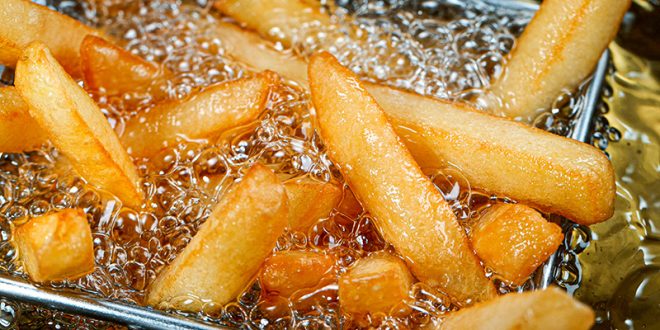
Oil varies widely in eating quality, functionality, and rate of deterioration depending on source, processing, or formulation. The initial quality of frying oil may have a significant impact on the quality of fried food prepared with it.
Oil also plays a great role in determining the storage stability quality of the fried product. Most of the time, the main reason a specific oil is selected for frying is because it’s locally available. Over the last decades, the world oilseed companies and the palm plant growers have developed more stable oils, both through conventional breeding process as well as through mutagenic and transgenic methods. This development, along with the technical advancement in the frying industry, has allowed the fried food processors to make and deliver shelf‐stable fried products to the consumers.
The initial quality of oil as well as its durability during frying is influenced by all the steps involved in processing the oil. The common steps of oil processing include filtration and degumming, alkaline or physical refining, bleaching, hydrogenation, winterization or fractionation, deodorization, and packaging.
There are three important factors in oil alteration during frying: the exposure to water (from potatoes), to high temperatures, and to oxygen. During repeated heating of oil at temperatures between 160 and 180 C there are various oxidative, polymerization and thermal degradation reactions that change the quality of the oil leading to the production of free fatty acids and other degradation products that may be harmful to human health. Many countries have created regulations and recommendations to control the reuse of frying oils such as the use sunflower or rapeseed oil at an optimum temperature of 175 C, filtration of the oil once a day and replacement of the oil after 20 frying hours.
High-oleic oils are more stable than low-linolenic oils. High-oleic sunflower, safflower or peanut oils have the best prospects for large-scale applications. The stability can be improved by the addition of antioxidants such as tocopherols.
Different Solutions for Different Products
Nicolette Drieduite, Technical Business Development Manager Foodservice, Cargill reveals that in the potato par-frying industry, they primarily provide customers with sunflower-based soft seed oil blends. Soft seed oils have a relatively low content of saturated fat (SFA) and because of that have a healthy image. Thanks to the inclusion of high oleic oils in soft seed oil blends, the stability of the oil is ensured. Palm oil is a cost effective alternative but has a higher content of saturated fat (SFA).
“Our customers in the potato snack industry also have a choice between tailor-made sunflower-based soft seed oil blends and palm oil. In this application, the choice of oil will depend on company policy, consumer trends and/or retail requirements,” Drieduite explains.
According to experts from Bunge Loders Croklaan, the key function of frying oil is to make a tasty, crisp product and to create a great mouthfeel and eating experience. “When it comes to the provenance of potato frying oils, we see a great interest in organic and more stable oils like high oleic. The mitigation of contaminants, like glycidyl and MCPDe in frying oils and the avoidance of frying by-products are key topics. Sustainability and traceability remain important as well,” the company experts say.
You can read the rest of this article in your complimentary e-copy of the May/June Issue of Potato Processing International magazine, which you can access by clicking here.