Smart Farming Gives Rise to Silent Revolution in the Potato Sector
Agriculture is under increasing hardship all across the world. Modern agriculture has several obstacles, including a shrinking pool of qualified employees, the effects of climate change, and an ever-increasing human population to cater to.
Potato production in the world reached 406.5m tons in 2019, 409m tons in 2020, and 414.5m tons in 2021, with production predicted to increase in tandem with global population growth. However, urbanization is currently affecting the agricultural economy. With the next generation of farmers moving to cities, the agricultural workforce is shrinking and aging. As a result, farms desperately require innovation, particularly in terms of technology.
In this regard, the agricultural sector is witnessing a silent revolution. New developments are changing the way farmers grow, care for, and harvest potatoes, one of the world’s most important staple foods. Modern machines are driving this transition.
Cutting-edge technologies and advanced equipment are altering the worldwide potato farming environment, delivering unprecedented levels of efficiency, production, and quality to the global business.
Potato cultivation has traditionally been labor-intensive, time-consuming, and highly dependent on a variety of factors ranging from weather to soil quality. However, the introduction of modern agricultural equipment has heralded a new age in potato growing.
Potatoes have significant application potential in smart farming, which allows for the production of crops that are economically, environmentally, and socially sustainable for future generations.
To boost crop output and quality, smart farming strategies are used in practically all growing and marketing operations. Smart agricultural practices have made it possible to boost potato productivity, track the growth of certain parameters, and make suitable decisions.
Technology will eventually replace traditional farming methods and help close the gap between large and small farmers. With recent advancements, it is now possible to control the field situation and make crop decisions in real-time.
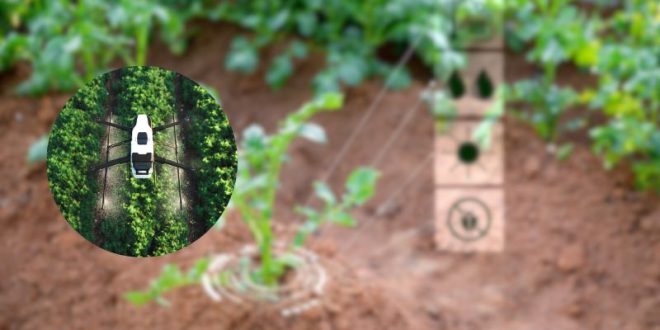
Smart farming can be applied to all stages of the potato value chain, including sowing, irrigation, soil monitoring and nutrient intelligence, harvesting, pest-disease-weed detection, climate monitoring, forecasting, and decision-making. These programs may monitor and identify where, when, and how much variability exists in a field, as well as make autonomous decisions to control it.
You can read the rest of this article in your complimentary e-copy of Issue 3 of Potato Business Digital 2023 magazine, which you can access by clicking here.