

Growing Carbon-neutral Spuds Using Cover Crops and Crop Rotation

A Welsh spud farmer offsets the entire carbon footprint of his potato crop on-farm and throughout the supply chain by growing summer cover crops rather than just in the autumn and his farm’s 110 miles of hedgerows also help sequester carbon.
Morgan Scale is looking to feed his soils in preparation for his main crop potatoes with cover crops grown throughout the summer and more grass leys in his rotation. He is also cutting back sharply on bagged fertilizer and cultivations as his family farm embraces regenerative agriculture, The Farmers Weekly wrote in a recent article.
The cover crop mix he is using is 50% grasses, largely oats; 25% legumes such as clovers and vetches; 20% brassicas such as forage rapes and turnips; and finally 5% flowering crops such as phacelia, buckwheat, and sunflowers.
The farm is already sequestering enough carbon to offset not only the farming side of potato production, but also emissions throughout the potato supply chain, from transport, storage, packaging, and to the kitchen table, to produce a truly zero-carbon spud.
The farm’s rotation is focused on the potato crop, and the grower’s area has more than doubled in the last five years as he takes advantage of Pembrokeshire’s favorable potato growing climate of high rainfall combined with fertile soils – organic matter in this mixed farming area can reach 10%.
The growers’ family farms 360 ha of silty loam soils and he has integrated the potato crop along with suckler cows and sheep grazing mixed leys, together with maize and a small area of spring barley.
With the farm’s first zero-carbon crops last year, the traditional potato nitrogen fertilizer rate was cut from 225 kg/ha to 100 kg/ha without any effect on tuber yields, and this season he is trialing some areas with as little as 50 kg/ha.
Fertilizer and fuel are calculated to account for nearly 90% of greenhouse gas emissions from the growing of potatoes, with the rest largely made up of pesticide use, seed and irrigation. Therefore, the fertility building from leys and cover crops helps cut fertilizer use and the fewer cultivations save on diesel.
Currently, the farm is growing 28 ha of Maris Piper for the pre-pack market and 20 ha of Marfona for the early baking trade, plus a range of other varieties. Yields have been fairly constant at 50-75 t/ha over the switch towards the regenerative approach.
The offsetting of carbon emission through the supply chain from the Morgan Scale is impressive as the Haverfordwest-based potato packer Puffin Produce calculates that only 18% of the carbon footprint from growing potatoes in Pembrokeshire comes from the farmer, with the rest from the package, transport, cooking, and wastage.
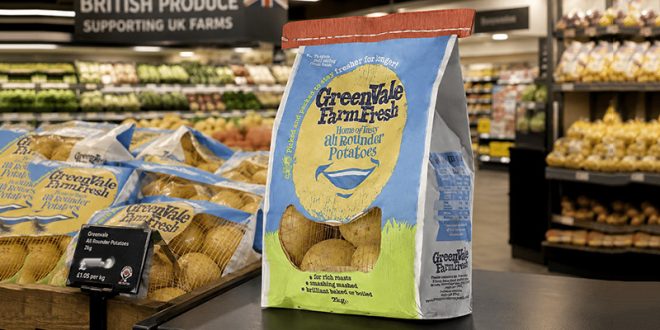
Scale’s tubers and those from five other Pembrokeshire growers are now available under the Root Zero brand throughout the UK. This is happening through a deal with Waitrose and the Co-op via his local packer Puffin Produce, which promises to make growing the brand “financially sustainable”.