


Innovative Potato Plant that can Detect Gamma Radiation
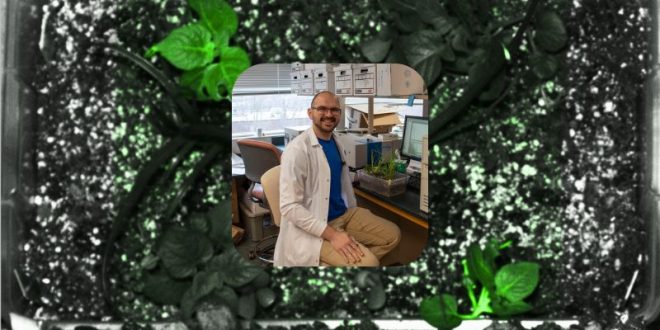
A University of Tennessee Herbert College of Agriculture researcher has created a potato plant that can identify dangerous radiation levels without the need for sophisticated monitoring equipment. The plant can detect gamma radiation.
The plant, often referred to as a phytosensor, was created by PhD candidate Rob Sears to change leaf fluorescence to signal high radiation levels. The plant emits a green glow in response to gamma radiation, which makes precise warnings visible across great distances. Potatoes are the perfect plant for research as well as for the future mass application of the produced variants because they are grown all over the world in both hospitable and unfavorable regions.
Sears says that potatoes reproduce through tubers in the soil, spreading across diverse terrain while producing genetically identical offspring that provide consistent results.
“Potatoes are highly resilient and are excellent at adapting and multiplying in different environments. They also have complex responses that are often specific to an environmental stressor, making them ideal reporters of conditions such as gamma radiation. My research aimed to make these responses visible even from a distance, acting as a natural warning sign of harmful radiation without the need for mechanical sensors,” Sears added.
There is a growing need for reliable and practical radiation detection techniques as long as nuclear energy is utilized globally. Phytosensors can enhance the safety and health of workers and residents near radiation sources because they are inexpensive, simple to use, and don’t need any mechanical maintenance.
“It is a rewarding experience to see the fundamental radiation biology I have studied transform into an engineered biological device that has the potential to impact future radiation monitoring. Not only that, but phytosensors demonstrate the potential of synthetic biology to engineer plants as ‘devices’ that can impact not only agriculture but also provide valuable tools for increasing the safety of our environments,” the researcher also mentioned.
Sears will graduate in December 2023, and he looks forward to continuing to improve the world around him through the development of bioengineered plant varieties.
The research project was funded by the Defense Advanced Research Projects Agency (DARPA).