

European Market Challenges and Opportunities
The somewhat unexpected availability of various effective COVID-19 vaccines offers perspectives for everyone the second half of 2021. The main hope is that measures such as lockdowns, curfews or the ban on events can be revoked and life can gradually return to normal.
The figures for 2020 published by Belgapom, the Belgian potato trade and processing industry association illustrate the pandemic’s impact on the sector: in total only 5.08 million tons of potatoes were processed into fries, mashed potato products, chips and flakes, whilst all the companies had budgeted for new growth for that year. It concerns a decrease of 4 % compared to 2019, so that the production figures reached the lowest level in 3 years. In addition, the COVID-19 crisis also resulted in a fall in investments by 15% to EUR248m in 2020 while direct employment in the sector took a hit too, with a 16.5 % decrease from 5,001 employees last year to 4,179 FTEs in 2020.
In figures
The production figures in the frozen sector fell by almost 100,000 tons (from 2.23 million tons to 2.13 million tons) which is 4.5 %. The impact on the production of fresh fries was far larger relatively speaking: 66,000 tons (- 18.7%). The fall remained limited for the other products (mashed products, chips, flakes and granules) to 11,000 tons (from 684,000 tons to 671,000 tons), namely 2 %. These figures illustrate earlier reports with regard to the impact of the closure of food service and the same level of consumption of potato chips or the temporary rise in the sale of frozen potato products. On the other hand, the 2020 export figures for frozen potato products show that the Belgian producers have been able to limit the decline compared to the figures for companies in neighboring countries. This can be explained by the fact that the Belgian industry focuses more on the retail sector than the companies in the Netherlands and France. Nor should we forget that quite a few Belgian potato growers sell their potatoes to processing companies in those countries so that the pandemic’s impact is greater on those arable farms.
Finally, Brexit will also have played a role in the production and sale of frozen potato products. The United Kingdom is the second largest buyer of these products, after France. With an eye to Brexit at the end of December, exports across the Channel had risen sharply. It seems self-evident that a correction of these figures can be expected for the beginning of 2021.
According to the press release, “After all, the role of the hospitality and foodservice sectors is crucial for the recovery of the Belgian and global potato market. However, as of today, it is still unclear when and how normal life will resume. And there are still further major challenges that the potato chain is being confronted with. Consider the European “Green Deal” and the “Farm to Fork strategy”, that is to make the entire chain more sustainable and carbon neutral or circular. Every link in the potato chain is currently working out measures in this respect and at company level operators are working on a sustainability plan and reporting. A typical example of this is the transition from storing consumer potatoes using the chemical sprout-suppression preparation CIPC, that is banned starting from the 2020-2021 season. In the meantime, the chain has implemented natural products on the basis of mint or orange oil, ethylene or 1.4 DMN that is naturally present in potatoes. The European potato sector is thus surging ahead of the rest of the world at such a speed that the other countries (amongst other things in connection with the approval of these products) are not always able to follow. Unfortunately, protectionism is also increasingly rearing its head: from nationally developed labels to unfair antidumping measures that are being introduced to hinder existing trade and develop a philosophy of ‘our own products first’ – even if this is not always the most sustainable development. With its collaboration with the NGO Trias, Belgapom wants to continue its focus on supporting the cultivation of potatoes in developing countries. But the industry association also hopes that the EU will continue to uphold the policy of free trade as a driver for growth and prosperity. In any case, the Belgian and European potato chain is looking forward to finally meeting up again at the Interpom 2021 European potato trade fair that will be held in Kortrijk XPO from 28 to 30 November, since the potato sector needs personal contacts more than any other sector.”
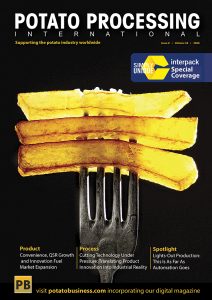
You can read the rest of this article in your complimentary e-copy of the March/April Issue of Potato Processing International magazine, which you can access by clicking here.