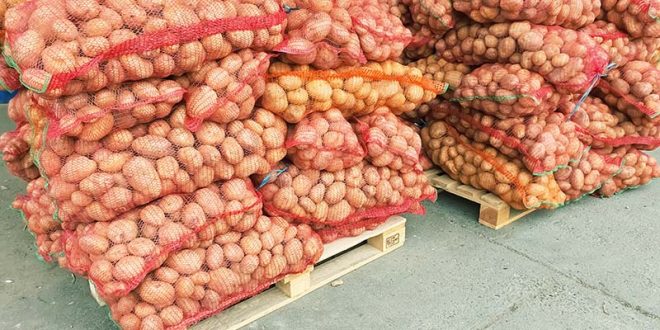


Potato Starch Market Outlook to Remain Positive
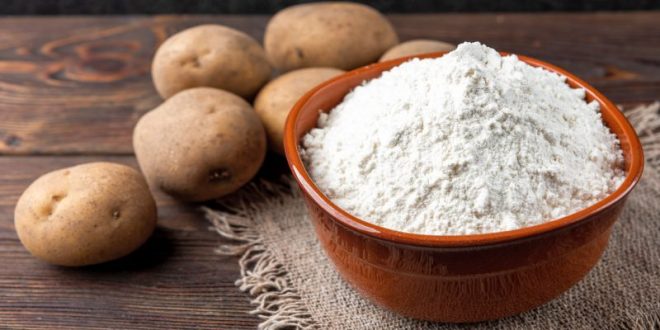
According to a recent Global Market Insights, the spud starch market outlook is set to remain positive as private entities initiate key product development strategies.
Although the humble potato has earned considerable criticism from diet-conscious factions of the global consumer population, the vegetable has started to re-emerge as a prominent health ingredient in recent years. This is attributed greatly to the rising awareness regarding the benefits of potato starch as a viable solution for gut bacteria health.
“With dietary starches gaining favor as tools for health maintenance, potato-based resistant starch has started to garner interest due to its specific health attributes. Research efforts in the potato starch market have revealed the multitude of benefits demonstrated by resistant starch in metabolic and gut microbiome health,” the above-mentioned source reveals.
Potato-derived starch, especially in a cooled state, can resist digestion in the small intestine and travels directly to the large intestine where it is fermented into metabolites such as butyrate, acetate, propionate, and others essential to microbiome and gut health.
Potato Business: How has the ongoing input cost crisis impacted potato cultivation and starch prices?
GMI: In recent years, potato growers have been facing increasing challenges, arising mainly from the significant surge in input costs, including fertilizer, fuel, labor, and electricity, to name a few, which have asserted a great influence on planting decisions for the 2022-2023 potato season. According to the NEPG (North-Western European Potato Growers), in January 2022, production costs grew by nearly 15-20% as compared to January 2021.
The prices of fuel, natural gas, and electricity have reached unprecedented levels, which has affected potato cultivation, where these inputs play essential roles. The ever-increasing natural gas prices, for instance, are driving up fertilizer costs to record highs, which has made growers hesitant to use the products, in turn impacting planting areas in upcoming seasons.
While this has stymied potato cultivation to an extent, the demand for starch derived from potatoes continues to grow year by year. Despite market uncertainties, global demand for potato processing remains strong, which is driving growers in some regions to focus on increasing their planted areas.
In Europe, for instance, several potato starch industry players are poised to witness a favorable growth trajectory despite prevailing market conditions and the influence of the COVID-19 pandemic. This includes Royal Avebe, which is on track to achieving its strategic target for a USD105 (EUR100) performance-price by FY2024/2025 and has announced a USD98.65 (EUR93.30) performance price for FY 2020/2021. Among the key reasons behind this achievement was the strategic direction following a 2-year period where low market supplies and higher native starch prices proved beneficial for performance price.
In the Netherlands, the year 2020 observed a better growing environment for starch potatoes than the previous ones. This trend was also observed in other European nations, where the cultivation and consumption of starch potatoes have increased significantly.
 How did the potato starch market outlook change due to the reorientation of farmers worldwide toward wheat?
Current events like the COVID-19 pandemic and the ongoing Russia-Ukraine war have left supply chains in shambles, creating food insecurity on a global scale. Access to important mass-produced grains like rice, corn, and wheat has become difficult, which has created significant food gaps, given that these grains are among the necessities for nourishment worldwide. In an attempt to tackle this issue, governments across the globe are encouraging crop farmers to diversify their cultivation to encourage a better food supply.
In regions like Canada, India, and the US, farmers are being encouraged to plant more wheat. Farm subsidies over the past few decades have also been focused on enhancing the development of crops like wheat and corn. While beneficial from the food security perspective, this focus has created certain obstacles to the growth of industries associated with alternative staples, like the potato starch industry, which depends on optimized potato cultivation.
The industry is facing further challenges as potato cultivation in nations like India becomes difficult, due to plummeting prices in the current year. In 2021, the rapid rise in potato prices encouraged farmers to grow potatoes on a larger scale. In 2020-2021 potato production rose to 53.69m tons from the 48.56m tons produced in 2019-2020, a trend that drove farmers to cultivate more potato crops. However, in the new year, an unprecedented rise in input costs like fuel, labor, and fertilizers and a sharp decline in potato market prices have made the cultivation of this crop unprofitable for farmers. Trends like these could not only drive growers to diversify to other crops like wheat but also create an uphill battle for related sectors like the potato starch industry.
Potato cultivation to face disruptions amid ongoing conflicts between Ukraine and Russia
For the past two years, consumers worldwide have been battling intermittent shortages in various food products, first due to the novel coronavirus outbreak and more recently due to the challenges arising from the Russia-Ukraine war. Although the situation was anticipated to improve in 2022, this ongoing conflict has instead intensified the issue, with crops like potatoes becoming the most recent addition to the list of food items in short supply.
While relatively less affected than other commodities like sunflower oil or wheat, which are cultivated mostly in Ukraine, the intensification of the conflict has blocked the supply chain and trade of potatoes to a great extent, increasing the food insecurity burden.
According to the UN’s FAO (Food and Agriculture Organization), Ukraine is known as the third-largest potato producer, with over 20.8m MT harvested in 2020 alone. Despite these massive production levels, Ukraine has historically needed to import nearly 0.3m MT of potatoes from other nations like Poland and Romania, mainly due to massive domestic consumption of the crop.
The war between Ukraine and Russia, however, has not only restricted local potato production but also created a barrier to potato trade as well as post-harvest losses due to the destruction of potato warehouses, which could put a strain on potato starch production in the region. As a result, the potato starch industry is now characterized by availability uncertainties, as shockwaves from the crisis weigh heavy on the flow of raw materials.
To respond to these issues, several initiatives are being taken by global authorities to help revive the potato industry in Ukraine. An example of this is the UktoUkraine initiative, which introduced its third project, dubbed Victory Gardens, in April 2022, to supply vegetable seeds and gardening equipment to Ukraine via Poland, to help communities tackle food shortages. Funds raised through the UktoUkraine initiative would be utilized to purchase onion, potato, carrot, beetroot, and various other seeds in Poland, which would then be delivered to communities in central and western Ukraine.
The United Nations, through the FAO, has also doubled its initial request of USD50m to over USD115.4m, to prevent further deterioration of food security in Ukraine and help local farmers plant potatoes and other vegetables during the spring season, thus preventing potential disruption to winter crop harvesting.
Major strategies implemented by key players to remain relevant in the potato starch industry
Given the myriad uncertainties unearthed by recent events on potato cultivation worldwide, it is become essential for major players in the potato starch market to undertake targeted strategies to strengthen their foothold in the global landscape. These initiatives range from novel product innovations to collaborative efforts to differentiate themselves in the competitive market and create a strong presence worldwide.
For instance, research scientists at Texas A&M AgriLife initiated two studies in June 2022 to examine ways to alter the ratio of amylose and amylopectin, two potato-derived starch molecules, to enhance the industrial as well as culinary applications of potatoes with the help of novel technologies like CRISPR.
Meanwhile, in September 2021, Griffith Foods teamed up with MSP Starch Products Inc., to develop Solnul, an innovative prebiotic seasoning made using resistant potato starch, with human microbiome research efforts supporting the product’s efficacy in enhancing microbial balance, regularity, and overall GI health.
Potatoes have long been considered a staple in diets worldwide. Despite their contentious reputation, potatoes are known as an essential source of micronutrients, with a substantial content of vitamin B6, vitamin C, iron, folate, potassium as well as fiber.
Ranked as the most consumed crop in the US and the fourth-most consumed crop in the world, closely following rice, wheat, and corn, as per the USDA (US Department of Agriculture), potatoes continue to gain popularity as an essential part of diets worldwide. This could, in turn, present lucrative opportunities for potato starch industry growth over the forthcoming years.