

Developing Potato Varieties for Tropical Conditions
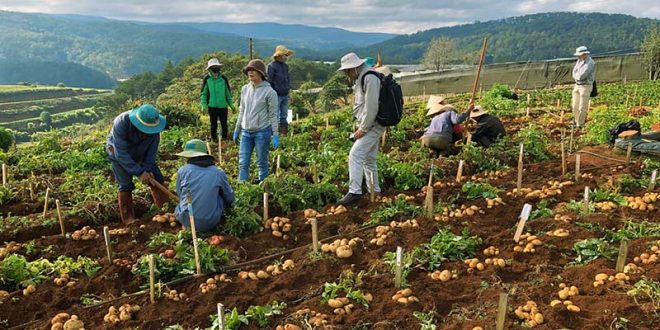
In Vietnam, HZPC is collaborating with the potato institute CIP (International Potato Centre) to develop novel tropical potato varieties. Wichard Sanders works with tropical varieties as a breeder at HZPC and is heavily engaged in this project.
The project’s goal is to create five potato varieties that produce high yields and satisfy customer demands. Southeast Asian farmers use a lot of pesticides. Chemical use can be decreased while yields are maintained or even improved by incorporating more resistances into these new varieties. It also guarantees farmers have a consistent income because they can grow and sell potatoes all year. In addition, rather than transporting seed potatoes from Europe to Southeast Asia, the new varieties enable seed potatoes to be grown and propagated locally for HZPC.
Conditions in tropical regions vary substantially from countries like the Netherlands, HZPC’s home country. The light, irradiance, precipitation, and humidity are all different. And so that also calls for a potato variety that performs well in those conditions.
“Close to the equator, in tropical regions, they always have about 12 hours of darkness and 12 hours of light per day. As a result, the plants will look different from here in the Netherlands. Moreover, they do not have a real winter there, but very wet or rather dry periods. As a result, they can realize two shorter crops in a year. That means you will harvest a variety after a short growing period and the variety will only have a short period of dormancy so you can quickly start the next crop. Most of HZPC’s existing varieties do not fit into that growing system and appropriate disease resistance is lacking. There are also diseases that we do not have in the Netherlands. We may be familiar with the viruses but their prevalence is different from what we are used to,” Sanders mentioned.
Reaping the Benefits Later
The initiative in Vietnam is being funded by the Syngenta Foundation for Sustainable Agriculture to raise the profile of potatoes in Indonesia and create better varieties for the conditions there. There are several practical reasons why the project is being conducted in Vietnam rather than Indonesia.
“It is much more difficult to work in Indonesia because you cannot import materials as a result of the quarantine policy. It is also more difficult to send materials from Indonesia to the Netherlands and you never know whether they will be of sufficient quality. We started looking around and ended up in Vietnam. This is similar to Indonesia in terms of climate, it is easier to bring material in and the country has breeders’ rights protection. If you develop a variety there, you can protect it there too. And even better: the people there are young and eager to learn. They realize that subsequent generations will reap the rewards of the work they are doing now. They are therefore open to new things”, Wichard explains.
Surprise Effect
“We are collaborating with CIP for this project because they have been breeding in the tropics for some time. They have selected genetics that are better adapted to tropical conditions than HZPC’s varieties. We have varieties that look fantastic but these traits might be lacking in the CIP varieties, along with certain resistances. We, therefore, crossed a CIP parent with an HZPC parent to combine the best of both,” the expert declared.
For the first time, seedlings from this material were planted in Vietnam in 2017. The last few years have been dominated by the propagation and selection of the best individuals in trial areas located throughout Vietnam. Meanwhile, plants from those people were transported to the Netherlands in a test container by the Dutch Food and Consumer Product Safety Authority.
Wichard has the tools and resistance tests in Metslawier to test a variety more thoroughly, and he will be able to use the seed potatoes for the first time in the breeding company’s trial fields in the Netherlands.
“That is perhaps the best part of my job: digging up the varieties in the trial field and then seeing whether what you put in then comes out again. That surprise effect is always amazing,” Wichard Sanders said.
According to him, sustainability should not be just a slogan.
“It should not just be in our heads, but also at the heart of HZPC. Not because this makes us good people, but mainly because we can then genuinely improve potato cultivation with these varieties. There is still much work to be done in this project when it comes to resistance, for example. In Vietnam, they have a great saying for this: a grain of rice costs a bowl of sweat and a bowl of tears. It is no different with potato breeding,” Sanders concluded.