

GC–MS Analysis Identifies Potential Drought Stress Biomarkers in Potato
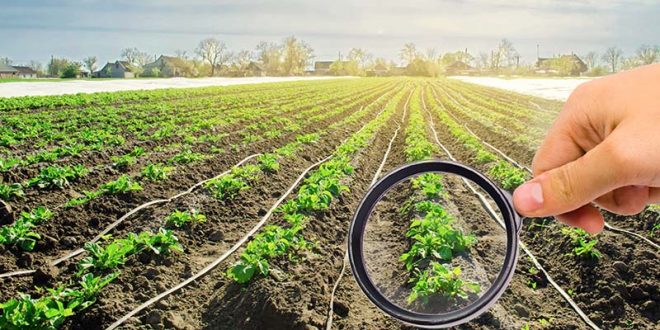
Researchers at the University of Reading have identified volatile organic compounds (VOCs) that could serve as early indicators of drought stress in potatoes, offering potential new tools for breeding more resilient cultivars.
The study, published in Frontiers in Plant Science, examined VOC emissions from two potato varieties, Maris Piper and Désirée, under both drought and well-watered conditions. Using thermal desorption collection and gas chromatography–mass spectrometry (GC–MS), the team profiled VOCs across a four-week period.
In total, 23 compounds were identified and 49 more tentatively classified, including sesquiterpenes, alkanes, monoterpenes, and methylbenzenes. Statistical analysis revealed that seven compounds showed significant differences between cultivars and treatments. Among them were two farnesene isomers, a xylene isomer, 2,6-dimethyldecane, decahydronaphthalene, and 2-methyldecalin, which were tentatively proposed as markers of drought stress.
Potatoes are particularly vulnerable to fluctuations in water supply due to their shallow root systems. Drought reduces yield and quality, making the crop a prime candidate for research into non-invasive stress detection methods. VOC profiling has emerged as a promising approach, with emissions reflecting underlying physiological and biochemical responses, such as stomatal closure, osmoprotectant production, and altered root architecture.
The University of Reading team concluded that while VOC responses are highly cultivar-specific and complex, they present valuable opportunities for advancing breeding strategies. Understanding the genetic basis of VOC profiles linked to stress resilience could help develop varieties with greater tolerance to drought. The researchers emphasised that future studies integrating multi-omics approaches and gene validation will be essential to harness VOCs effectively in potato breeding programmes.
Such developments could play a significant role in safeguarding potato production against climate variability, contributing to global food security.