

GB Potatoes Survey Reveals Grower Confidence Crisis As Costs And Policy Concerns Mount
British potato growers are facing a period of significant uncertainty, with confidence in the sector weakening amid rising production costs, policy concerns, labour shortages and increasing pressure on farm margins, according to a new industry survey conducted by GB Potatoes.
The survey, analysed by Pareto Consulting and carried out in late 2025, paints a picture of an industry under strain in the short term, although many growers remain optimistic about the sector’s longer-term prospects if the right market conditions, policy support and investment environment can be established.
According to the findings, 43% of respondents described themselves as pessimistic or very pessimistic about prospects for the next 12 months, while only 26% expressed confidence. Looking further ahead, sentiment improved considerably, with 37% saying they were confident or very confident about the industry’s five-year outlook, compared with 24% who remained pessimistic.
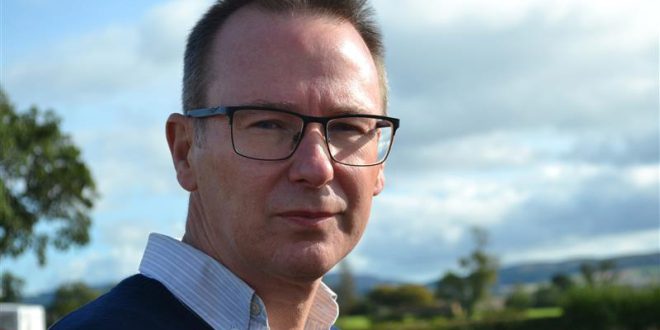
The results come at a time when the UK potato sector continues to contend with a succession of economic and operational challenges. In commentary accompanying the survey findings, GB Potatoes CEO Scott Walker (pictured) said the industry had endured years of disruption, ranging from Brexit and the Covid-19 pandemic to the war in Ukraine, labour shortages, energy inflation and increasingly volatile weather conditions.
“The challenge facing the industry today is not simply another difficult season, but the cumulative effect of years of sustained pressure,” Walker said.
The survey was completed before the recent escalation of conflict involving Iran and before the current crop was planted. Even at that stage, growers were already reporting growing concerns about profitability and business resilience.
A striking 94% of respondents reported that production costs had increased between 2024 and 2025, while 58% said those rising costs were already affecting their ability to invest in future production.
“These results reflect what we are hearing from growers on the ground,” Walker said. “Confidence is clearly low for the coming season, and the pressure on margins is very real. Growers are having to make difficult decisions about planting, investment and the scale of their operations.
“But the survey also shows that growers have not lost faith in the future of British potato production. Confidence improves when they look beyond the immediate season. That tells us there is still belief in the sector – but it depends on the right conditions being created.”
The survey also highlights a widening gap between growers and policymakers. Some 83% of respondents said they lacked confidence in the relevance of government policy to the needs of the potato sector.
Growers identified access to crop protection products, water availability and environmental regulations as among their most significant concerns, with more than 80% describing each as a moderate or extreme challenge. Labour availability remains another persistent issue, with 68% reporting difficulty or extreme difficulty in recruiting staff.
Walker argues that many of these pressures are now converging simultaneously. Rising fertiliser and energy costs, increasing machinery and labour expenses, and the removal of England’s Basic Payment Scheme have collectively reduced the sector’s ability to absorb external shocks.
“While the sector has shown remarkable resilience over many years, resilience itself is not unlimited,” he said. “Without confidence and sustainable returns, there is a risk of gradual but permanent contraction in a sector that underpins more than £4.5 billion of economic activity and plays an important role in UK national food security.”
The survey suggests that concerns about profitability are already influencing production decisions. Although planted potato area increased between 2024 and 2025, intentions for the current season indicate a more cautious approach.
Among ware potato growers, only 12% planned to increase planted area, while 33% intended to reduce it and 56% expected to maintain current levels. Similar trends were recorded among seed potato producers, with 30% planning reductions and only 12% intending to expand.
Confidence levels appear closely linked to those planting decisions. Growers planning to reduce area were significantly more likely to express pessimistic views about the future and dissatisfaction with contractual arrangements. Among pessimistic ware growers, 43% intended to reduce potato area compared with 23% among more confident producers.
The survey also revealed differences between generations of growers. Short-term pessimism increased with experience, rising from 14% among respondents with five years or less in the sector to 45% among those with more than two decades of experience.
Despite the challenges, the results point to an industry that continues to invest in its future. Thirty-eight percent of respondents said they were already investing in mechanisation or automation technologies, while a further 29% were considering such investments.
The findings support Walker’s view that innovation, technology and collaboration will play a central role in strengthening the sector’s resilience. He argues that future growth will depend on a combination of science-led production practices, smarter technologies, supportive policy frameworks and closer cooperation across the supply chain.
Those themes are expected to feature prominently at the upcoming GB Potato Summit, which GB Potatoes is organising in partnership with the National Potato Innovation Centre. The event will bring together growers, researchers, policymakers and industry stakeholders to discuss issues ranging from pest and disease management to soil health, productivity improvements and input efficiency.
For GB Potatoes, the survey findings present both a warning and a challenge. While growers remain committed to the sector and continue to invest in productivity-enhancing technologies, the organisation believes restoring confidence will require tangible action to address the economic and regulatory pressures affecting potato production.
The survey suggests that British potato growers still see long-term opportunities for the industry. However, whether that confidence translates into future investment and production growth may depend on how effectively government, researchers and supply chain partners respond to the concerns now being raised across the sector.