

The Argentinian INTA is Close to Releasing the First Latin American Genetically Edited Potato
Scientists from Argentina’s Instituto Nacional de Tecnología Agropecuaria (INTA), the state institution in charge of carrying out and centralizing agricultural research in the country, are on the verge of releasing the first genetically altered potato in Latin America.
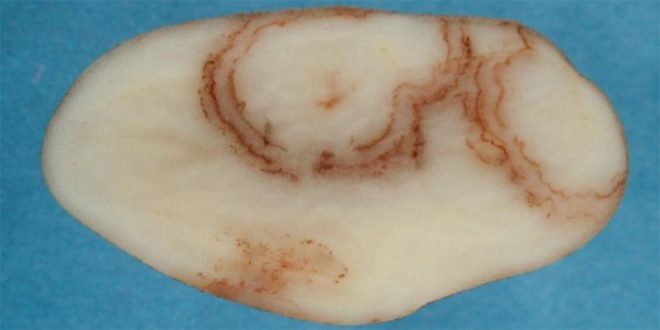
The goal of the research was to turn off the gene that causes potatoes to darken after being chopped, peeled, or hit during the harvesting and shipping process. This feature, known as enzymatic browning, happens as a result of oxidation of the potato and modifies its flavor, texture, and color, hence impacting its nutritional values and product quality.
In addition to costing farmers millions of dollars in lost revenue, browning and bruising potatoes encourage food waste in households and stores as customers throw away products that don’t look good.
An Innovative Technology for the Region
Using the cutting-edge CRISPR-Cas9 genetic editing method, Dr. Matías González was able to turn off the gene that codes for the expression of polyphenol oxidase enzymes, which cause browning, as part of his doctoral thesis developed in the Laboratorio de Agrobiotecnología de la Estación Experimental Agropecuaria de Balcarce (INTA), which is co-directed by Drs. Sergio Feingold and Gabriela Massa.
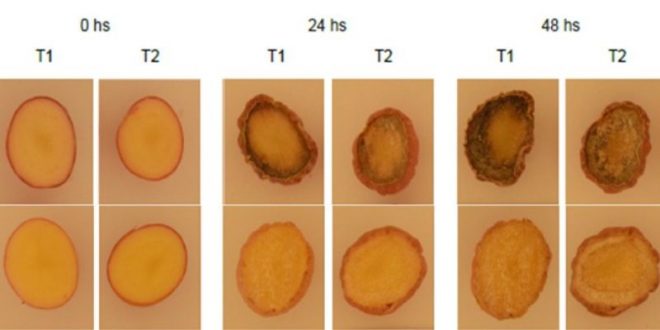
Experiments revealed that the zest of genetically modified potatoes can remain exposed to air for up to 48 hours without turning dark, a condition that regular potatoes can only achieve for a short while.
The edited potato has already been submitted to the Instancia de Consulta Previa before the Argentine regulatory authority, which concluded that the product is considered conventional because it does not have genes from other distant organisms, which means that the potato should not follow the regulatory framework designated for transgenic crops.
Future of the Edited Potato in Latin America
Although the genetic improvement was carried out in the Desiree variety, it is possible to replicate it in other varieties.
“This potato sets a precedent for the use of the most recent and innovative modern biotechnology technologies for the improvement of crops and their foods, thanks to that it is possible to apply the same in varieties that may be of interest to consumers in other countries in Latin America and the world. This year it will be registered as a new variety and from then on it will be available to whoever wants to license it,” PhD. Gabriela Massa, researcher at INTA and CONICET, mentioned.
For María Andrea Uscátegui, executive director for the Asociación de Biotecnología Vegetal Agrícola – Agro-Bio, this development could have a positive impact in Latin American countries where potatoes are widely cultivated and are part of the daily diet of millions. of people, and it is one of the key crops of the peasant economy.
“If potato developers in other countries in the region wanted, they could license the technology to have it in the most consumed variety in their territories, something that would benefit hundreds of farmers who subsist on the cultivation of this tuber and who, in addition to dealing with losses due to pest and disease attacks, they must discard part of their production because their customers do not want to purchase bruised or browned potatoes. Reducing a source of food loss would mean less economic losses for them, in addition to a nutritional benefit for consumers,” Uscátegui added.
The government of Argentina recently provided funding to the institute so it could carry out research on potatoes and develop genetically modified types that are resistant to cold-induced sweetening. This enhancement would directly affect the potato chip market. Furthermore, the resource will be allocated towards the creation of an enhanced modified potato, which will optimize water utilization and increase its resistance to drought conditions.