

University Of Idaho Targets Growing Powdery Scab Threat In Idaho Potato Fields

University of Idaho researchers are stepping up efforts to address a rapidly escalating fungal threat to Idaho’s potato industry, as new soil testing shows that most fields in the state are now contaminated with Spongospora, the pathogen responsible for powdery scab and a key vector for potato mop-top virus (PMTV).
According to soil samples analysed by University of Idaho Extension, approximately 75% of Idaho potato fields contain some level of Spongospora. While not all infested soils have reached the threshold at which disease symptoms appear, the growing prevalence is already having commercial consequences, with rejected shipments, price penalties from processors and heightened scrutiny from export markets.
Powdery scab and PMTV are increasingly cited by fresh packing facilities and international trade partners as reasons for refusing U.S. potatoes. The issue has become particularly acute for shipments to Mexico, now the largest export market for U.S. potatoes following the full reopening of its domestic market in 2022.
In response, Phillip Wharton, associate professor of plant pathology, and James Woodhall, Extension specialist and associate professor in plant pathology, are preparing a multi-year research project aimed at developing more effective management strategies for growers. The initiative is expected to be supported by a two-year, USD 130,000 Specialty Crop Block Grant (SCBG), financed by the U.S. Department of Agriculture and administered by the Idaho State Department of Agriculture.
The researchers plan to evaluate a combination of cultural and chemical control measures, including irrigation practices, varietal resistance and the performance of fungicides and biological products reported to show efficacy against powdery scab in other potato-growing regions.
“Powdery scab is one of the potato diseases that people really haven’t been able to get any kind of a handle on in terms of control,” Wharton said, adding that planting clean, certified seed remains one of the most effective preventive measures currently available to growers.
Where fields have a known history of powdery scab, growers can submit soil samples to Woodhall’s laboratory to determine infection levels before planting. Demand for such testing has increased sharply in recent years.
“More recently people have been requesting a lot of tests for powdery scab,” Woodhall said. “We’re testing hundreds of samples per year for the presence of this organism.”
Survey data underscores the scale of the problem. In a statewide study conducted in 2013, only 20–30% of Idaho potato fields tested positive for powdery scab. Today, that figure has risen to as much as 75%, with around one-third of soils also harbouring PMTV.
The Idaho Potato Commission (IPC) and the Northwest Potato Research Consortium have both identified powdery scab and PMTV as top research priorities for 2025. The grant application submitted by the University of Idaho included letters of support from the IPC and J.R. Simplot Co..
“When we ship our potatoes to Mexico, powdery scab is one of the things that they look for and sometimes find,” said Travis Blacker, vice president of research and industry relations with the Idaho Potato Commission. “We’re looking at ways to control that better, so we don’t have these finds when we ship potatoes to Mexico.”
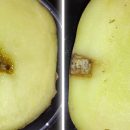
While powdery scab primarily affects tuber appearance rather than yield, its commercial impact is significant. Symptoms include surface blemishes, ruptured pustules and internal lesions that reduce marketability. PMTV can be more damaging, causing tuber necrosis, internal rust-brown arcs, raised rings on the tuber surface and, in some cases, yield losses. Certain potato varieties may carry either disease without visible symptoms, complicating detection and management.
Wharton and Woodhall suspect that changing climatic conditions may be contributing to the pathogen’s spread. Milder winters and wetter springs are thought to favour Spongospora survival and infection, with international research pointing to a link between early-season soil moisture and disease severity later in the growing cycle.
Field trials are scheduled to take place at the University of Idaho’s Aberdeen Research and Extension Center, where researchers will test combinations of less susceptible potato varieties and selected fungicide programmes under controlled conditions. Parallel irrigation management trials will be conducted at the Parma Research and Extension Center, focusing on fields with high disease pressure.
The aim is to identify critical windows during the growing season when soil moisture management has the greatest influence on disease development. Soil diagnostics developed through earlier SCBG-funded research will be used to quantify Spongospora and PMTV levels throughout the trials.
For Idaho growers facing increasing rejection risks at home and abroad, the findings could prove crucial in preserving market access and maintaining the reputation of one of the state’s most valuable agricultural sectors.