

The Benefits of Automatic Metal Detector Testing

Traditional methods of testing gravity-fed metal detectors and those installed on Vertical Form Fill and Sealing (VFFS) packing lines typically involve frequent and time-consuming stoppages, potential risks to operator safety, and often generate inconsistent results.
By Mike Bradley, Global Head of Sales (Metal Detection) Mettler-Toledo Product Inspection
In many cases, the test methods used do not confirm that the operational specification of the metal detector is being achieved. Automatic metal detector testing systems overcome these issues and can aid food manufacturing quality, efficiency and productivity.
The “Drop-Through”, “Fishing Line” and “Test Rod” methods are all routine performance monitoring test processes for vertical metal detection inspection systems. Manual testing often requires teams of operators to put their safety at risk by climbing ladders and reaching over machinery so that they can drop or insert test samples into a throat or gravity-fall metal detector. These test processes are unable to accurately verify the operational specification of the metal detector. This is because they do not confirm centerline testing – the least sensitive part of the metal detector – as the placement of test samples passing through is generally random. In addition, manual testing processes can carry cross-contamination risks and can potentially compromise food product quality, as the test samples come into direct contact with the product.
Mettler-Toledo has delivered a solution to all these problems, while also helping to improve Overall Equipment Effectiveness (OEE) and productivity: its Automatic Test System (ATS) on Safeline metal detection systems, won the CFIA Innovation Award for Quality, Hygiene, Security, and Environment in France in 2019 and has been recognized as accepted best practice by a major UK high street retailer.
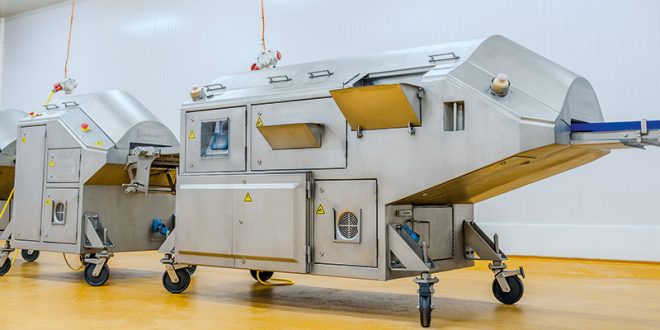
ATS is suitable for use in vertical food inspection applications such as snacks, chips, confectionery, infant formula, bulk flour, and nutraceutical powders, plus granulates such as sugar and food additives. Test samples are transported, by pneumatic control, up discreet non-metallic tubes inside the metal detector’s aperture to a defined position within the sensing coils. The test samples are then released, simulating the presence of a contaminant in free-fall under gravity. A software algorithm correlates centerline sensitivity with an edge of aperture sensitivity, eliminating the random nature of vertical metal detector testing.
Reduced Test (RT) Mode is an additional feature available on some throat and gravity-fall metal detection systems. When RT Mode is active, the metal detector monitors its online sensitivity performance and provides an alarm should the sensitivity drop below the specified level allowing companies to reduce the frequency of testing by up to 80%, without increasing their risk. This directly, and in some cases dramatically, improves productivity as production is now stopped less frequently for testing allowing productivity gains to be realized.
Major Italian savory snack producer PATA S.p.A has 30 throat-style metal detectors on its production line, of which five have ATS installed. RT Mode is included as standard on the Mettler-Toledo Profile metal detectors that it uses. ATS and RT Mode have provided several benefits for PATA and for other food manufacturers that use them:
#1 Ensure Compliance
ATS is the only method of testing that confirms centerline (worst-case) sensitivity performance. As such, it delivers test results of ongoing working performance that can be trusted.
When connected to centralized data collection and management systems, such as Mettler-Toledo’s ProdX software, ATS provides electronic records that are easily stored for future reference, audit compliance, or proof of due diligence. Having electronically stored data reduces the risk of errors or loss associated with paper records. This also supports rigorous quality control regimes, production optimization, and simplified production line operation.
#2 Increase Productivity
ATS tests are much faster than traditional testing methods. An end-to-end 3-metal test (ferrous, non-ferrous, and stainless steel) can be completed by a single operator in under 40 seconds, compared to an average of three to four minutes and two operators using traditional, manual methods.
By using RT Mode to reduce the testing frequency from every two hours to every 12 hours, a typical snack food manufacturer with 24 weigher-bagger lines running at an average of 100 bags per minute could save more than 4000 man-hours and produce 25 million more packs per year.
Mettler Toledo’s online calculators www.mt.com/md-roi-rt enable food manufacturers to work out how much they could benefit from using ATS and RT Mode.
#3 Enhance Operator Safety
Not only will operators be safer with ATS, but fewer of them will be needed to conduct testing. For example, instead of one operator having to climb high to drop a sample through the aperture, and one to record the result and remove the sample from the production line, ATS testing can be completed by a single operator. It virtually eliminates the need to work at height to conduct routine testing and removes the need for operators to reach across installed equipment to insert a test sample.
#4 Improve Product Quality and Food Safety
ATS is a non-invasive method of testing, so test samples do not come into contact with food, removing the danger of cross-contamination. The higher sensitivity levels of RT Mode mean that smaller, irregularly shaped metal contaminants can be detected. RT Mode also continuously checks the performance of the metal detector to ensure it is always working to a level as good as, or better than, the food manufacturer’s specifications.
#5 Additional Feature to Facilitate Social Distancing Requirements
Additional to ATS and RT Mode is an ‘Emulation’ feature which allows operators to remotely control the metal detectors by mirroring their interfaces on remote networked devices. This is ideal for testing systems installed in inaccessible locations plus also supports COVID-19 social distancing requirements and enhances operator safety.
Boxout
Food manufacturers can try out Mettler-Toledo’s ATS ROI Calculator here: www.mt.com/md-roi-rt
For more information, download Mettler-Toledo’s “Five Reasons to Invest in Automatic Test System”:
https://www.mt.com/gb/en/home/library/applications/product-inspection/automatic-test-system.html
Mettler-Toledo’s 2022 Snackex presence will be at booth 813, displaying a couple of their metal detectors with one of them being the ATS.