

Key Business Outlooks 2026: Justin Lai, Vice President of Sales & Marketing at FPS Food Process Solutions
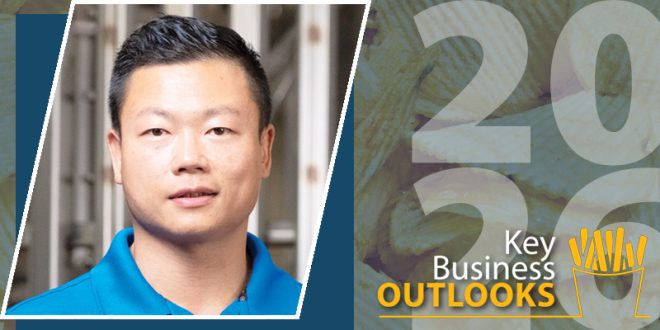
Key Business Outlooks 2026 turns to Justin Lai, Vice President of Sales & Marketing at FPS Food Process Solutions, who describes how shrinking in-house engineering capacity among processors has permanently altered the supplier–customer relationship. He explains why FPS is expanding beyond equipment supply into design, consulting, and digital integration, how regional investment dynamics are shifting—particularly in Europe, North Africa, and the Middle East—and why automation, flexibility, and measurable performance are becoming central to technology strategies as the industry moves toward highly automated, “lights-out” processing operations.
Looking back at 2025, which customer pressures proved structural rather than temporary, and how did they reshape your commercial or product strategy?
The reduction of internal engineering resources within customer organizations proved to be a structural shift rather than a temporary trend. This created a greater reliance on us for design and consulting services, requiring us to evolve beyond being an equipment supplier. In response, we invested in strategic hires and established partnerships to provide design engineering and utility services, complementing our equipment offerings and strengthening our position as a comprehensive solutions provider.
As you plan for 2026, which market assumptions are you revising, and where do you see the greatest hesitation or uncertainty among your customers?
We are adjusting our expectations for project activity in Europe. While demand for new potato processing projects was strong early in 2025, the past six months have seen significant slowdowns, with many projects delayed or placed on hold. The primary hesitation stems from concerns about oversupply and increased competition from Asia.
How do you expect investment behavior among processors to evolve in 2026, particularly regarding capacity expansion, efficiency upgrades, and automation?
We anticipate a continued slowdown in new facility construction. However, consolidation and process efficiency improvements will remain key investment drivers. Customers are prioritizing technologies and equipment that reduce reliance on manual labor, with automation and efficiency upgrades taking center stage.
Where did your strongest growth opportunities come from recently, and what did those projects reveal about changing customer priorities?
Our strongest growth has come from North Africa and the Middle East, where facilities tend to be smaller and produce a diverse range of products. These projects revealed a growing customer priority for flexibility and adaptability in design, prompting us to innovate and deliver solutions that accommodate multi-product operations.
How do you balance near-term customer demands with longer-term R&D investment, especially in a more cautious capital-spending environment?
The cautious capital-spending environment has created an opportunity to focus on R&D. By investing in new solutions now, we aim to stay ahead of the competition and be ready with advanced offerings when customers resume major investments.
Which developments in 2025 most disrupted your planning or sales pipeline, and how did your organization adapt?
The slowdown in Europe and a weaker summer for new capital equipment sales disrupted our pipeline. We adapted by leveraging our service group, which focuses on retrofits and rebuilds, effectively bridging the gap and maintaining revenue streams.
Which external drivers—energy, labor availability, regulation, digitalization, or sustainability requirements—are most influencing equipment purchasing decisions today?
Sustainability, energy efficiency, and labor availability are the most influential factors shaping equipment purchasing decisions today. Customers are increasingly prioritizing solutions that address these challenges.
From your perspective, which policy or regulatory developments would most support long-term technology investment in the potato processing sector?
Policies that promote and support digitalization would significantly accelerate technology investment in the potato processing sector, encouraging modernization and replacement of outdated equipment.
How do you see the relationship between promised technological performance and real-world operational results evolving, and where do customers now demand clearer proof of value?
Customers now demand clearer proof of value, with real-time metrics and process guarantees becoming standard expectations. Historically, KPIs were theoretical and rarely validated, but new technologies enable accountability and transparency throughout the production process.
What is your five-year vision for processing technology in the potato sector, and how does your company plan to remain relevant as customer expectations mature?
Our vision is to enable “lights-out” or dark factories, minimizing human interaction in potato processing facilities. This will involve deploying MES systems integrated with industry input and designing equipment that is flexible and reactive. We aim to remain relevant by positioning ourselves as an end-to-end solutions provider, supporting customers from concept to execution.