

European Potato Prices Collapse as NEPG Flags Overproduction and Trade Slowdown

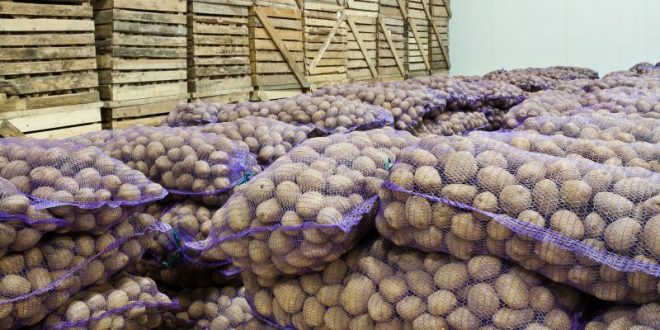
The North-Western European Potato Growers (NEPG) association has issued a stark warning to producers following a sharp collapse in farm-gate potato prices across the region. With an estimated 25,000 hectares more planted this year—a 5% increase over 2024—NEPG reports a surge in supply that coincides with sluggish global demand and intensifying competition from low-cost exporters.
Prices have plummeted from €30/100 kg in late February to just €7.50/100 kg in early June, a drop NEPG describes as “dramatic,” driven by a convergence of adverse market forces. While official hectareage figures are still pending, preliminary estimates suggest significant expansion in the NEPG zone, which comprises Belgium, the Netherlands, Germany, and France.
“The sector has fallen into a trap of overproduction, misled by two years of exceptional spot-market prices and a perceived endless expansion of processing capacity,” NEPG stated. “But the reality of a globalised and highly competitive market is quickly setting in.”
Exports Slow as Competition Grows
Eurostat figures show that exports of processed potato products from the EU-4 (Belgium, Germany, France, Netherlands) declined 1.8% in volume between 2023 and 2024, marking one of the most significant contractions in recent history outside the COVID-19 crisis. Prices, which had risen 64% between 2021 and 2023, have stagnated and are now in retreat.
NEPG highlights that Canada, China, and India have significantly expanded their footprint in key global markets, particularly in Asia. Exports from China and India alone have increased tenfold in the past five years, driven by low-cost production, proximity to emerging markets, and favourable trade conditions.
Meanwhile, a shift in U.S. trade policy under the current administration has disrupted European exports through new tariffs and regulatory barriers. The resulting dollar depreciation has further eroded the competitiveness of EU products on international markets.
Domestic Expansion and Processing Missteps
Buoyed by high free-buy prices in the spring of 2023 and 2024—although these affected only about 5% of total crop volumes—many European growers expanded their acreage in the belief that strong prices would hold. However, NEPG warns that this optimism was misplaced, particularly as some processors reported significant quality issues in the 2024 crop, leading to poor product performance and reduced sales.
In addition, the exceptionally early planting of both early and maincrop potatoes accelerated the transition between old and new crop volumes. This has exerted further pressure on prices, compounded by rain in April and May that, while below historical averages, enabled fast emergence and bolstered market expectations for higher yields.
A Tougher Road Ahead for European Growers
NEPG also points to the structural challenges facing European growers, including rising production costs, longer shipping routes, and more stringent environmental regulations compared to competitors abroad. Higher energy, water, and freight costs continue to raise the break-even point for European processors.
“European growers are not only contending with a cost disadvantage,” the group said, “but also with climate volatility, increasingly demanding regulatory frameworks, and mounting disease and pest pressures.”
Emerging agronomic threats such as wireworm, nematodes, and Stolbur phytoplasma are adding to the technical and financial burden of potato cultivation. At the same time, regulatory pressure on pesticide use, nitrate leaching, water abstraction, and carbon emissions is increasing year-on-year.
NEPG warns that unless growers and industry stakeholders reassess long-term profitability expectations and collaborate more closely to enhance competitiveness, the sector risks triggering further government intervention—including stricter crop rotation mandates, cultivation restrictions in sensitive areas, and tighter agrochemical rules.