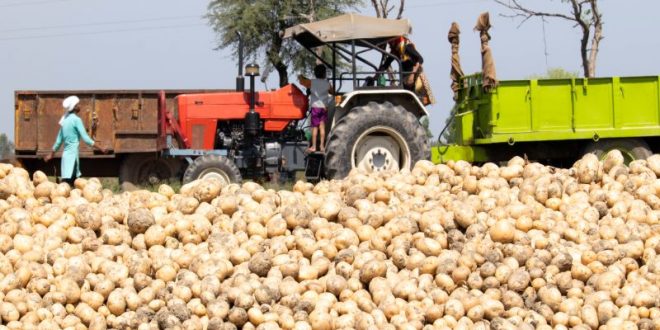


Mexico’s Potato Output to Rise 4% in 2025/26, but Drought and Labor Gaps Persist

Mexico’s potato production is projected to increase by 4% in marketing year (MY) 2025/26, reaching 2.28 million metric tons (MMT), buoyed by improved weather conditions across key producing regions. However, structural challenges—from drought and labor shortages to volatile prices—continue to cast uncertainty over the sector’s outlook.
The production growth follows a return of seasonal rains that eased drought conditions in several states, most notably in Sonora, Mexico’s largest potato-producing region. Total planted area is estimated at 63,000 hectares, with Sonora contributing 17,500 hectares to national output.
Despite the output increase, the gap between supply and domestic demand is widening. Total consumption is forecast at 2.78 MMT, up 3% year-on-year, fueled by rising demand for fresh potatoes, including imports from the United States. Fresh potato imports are projected to reach 225,000 metric tons, a 5% rise from the previous year.
Mexico’s potato production has expanded at an average annual rate of 3.6% over the past five years. In MY 2023/24, output rose 7% year-on-year to 2.12 MMT, largely due to expanded acreage. The five leading production states—Sonora, Sinaloa, Veracruz, Puebla, and Estado de México—accounted for 76% of the country’s total output.
Yet drought remains a serious concern in key regions. While rainfall has improved overall conditions, Sonora and Sinaloa continue to face severe water stress. Growers in these areas warn that potato sizes may be smaller and yield gains limited as a result.
The increase in planted area has also exposed another bottleneck: labor. Sinaloa, in particular, is grappling with a harvest workforce shortage, threatening both harvest efficiency and quality. The president of the National Confederation of Potato Producers has publicly warned of a potential market oversupply and downward pressure on farmgate prices.
Phytosanitary concerns also persist. As imports of U.S. fresh potatoes rise, some Mexican producers have raised alarms over biosecurity risks, citing a lack of adequate safeguards to prevent pest and disease incursions.
In terms of market distribution, fresh table consumption is expected to reach 1.50 MMT in MY 2025/26. Processed use is forecast at 0.59 MMT, mostly for chips, while the frozen segment is projected at 0.37 MMT. However, food inflation and shifting dietary preferences have softened growth in processed categories.
As of March 2025, Mexico’s overall inflation rate stood at 3.80%, with food inflation climbing to 4.19%, up from 2.38% earlier in the year. These price pressures, combined with seasonal supply disruptions, often result in sharp price fluctuations, particularly during the final months of the calendar year. Such volatility drives many consumers toward cheaper substitutes like corn and beans.
Per capita fresh potato consumption has remained steady at 14–16 kilograms annually over the past decade. Sector stakeholders argue that increasing year-round availability and stabilizing prices could unlock further consumption growth.
While Mexico’s potato industry is expected to post moderate gains in output and consumption in the year ahead, structural vulnerabilities—drought, labor, import risks, and inflation—continue to weigh on its long-term resilience.