

Potato Deficit Pushes Belarus to End Food Import Ban on EU States

Belarus has lifted its ban on importing key food staples—including potatoes, apples, onions, and cabbage—from so-called “unfriendly states,” including European Union member countries. The decision, effective from May 27, 2025, was officially confirmed by the Belarusian Ministry of Agriculture and Food and reported by state news agency BelTA.
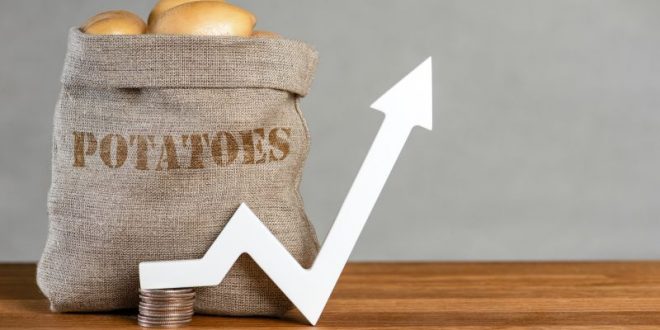
The easing of import restrictions comes against the backdrop of rising domestic food inflation and a pronounced potato deficit, which has gripped both Belarus and neighboring Russia in recent months. The Belarusian government cited the move as aligned with its broader policy of “openness, peacefulness, and good neighborliness,” a message it has also used to promote visa-free travel policies for EU citizens.
According to a statement by the Ministry of Agriculture, the import restrictions—first imposed in early 2022 as a retaliatory measure against Western sanctions—had been “restrictive for both domestic consumers and regional trade flows.” Officials framed the reversal as a pragmatic response to evolving market needs and recent European Union tariff increases on Belarusian agricultural exports.
In April 2025, the EU introduced higher tariffs on certain agricultural imports from Belarus, including dairy and meat products, as part of broader economic measures in response to Minsk’s support for Russia’s war in Ukraine. The Belarusian government portrayed its own policy shift as one of restraint and flexibility in contrast to Brussels’ more punitive posture.
The policy change also arrives amid significant strain on Belarus’s domestic food supply. President Alexander Lukashenko has repeatedly acknowledged the country’s potato shortage, which he attributed in part to domestic producers prioritizing exports to Russia, where prices have surged due to falling yields and supply issues.
“In early May, Lukashenko publicly criticized local farmers for diverting produce to the Russian market,” reported The Moscow Times. “He blamed the disappearance of potatoes from Belarusian shelves on the more attractive prices offered by Russian buyers.”
Official statistics from Russia’s Federal Customs Service show that Belarus exported a record 170,000 tons of potatoes to Russia in 2024, marking a 60.8% increase compared to the previous year. Price disparities—where potatoes sell for nearly twice as much in Russia—have made export more lucrative than meeting domestic demand.
Both Russia and Belarus have struggled to contain vegetable price inflation in 2024 and early 2025. In Russia, wholesale and retail potato prices have reached all-time highs, prompting discussions within the Kremlin about potential price controls and strategic food reserves. President Vladimir Putin acknowledged the issue earlier this year, attributing shortages to unfavorable weather conditions and lower yields.
Belarus, which employs state-mandated price controls on many staple foods, has faced additional challenges. The restrictions have made domestic sales unprofitable for some producers, incentivizing export behavior despite local shortages. In response, Lukashenko has urged citizens to grow more potatoes on their private plots to counteract frost-damaged harvests.
The re-opening of Belarusian markets to EU-grown vegetables is expected to offer short-term relief for consumers and may also ease trade tensions, although structural issues around food production, climate volatility, and regional protectionism remain unresolved.