

Optical Sorting Helps Processing Operations Gain Ground
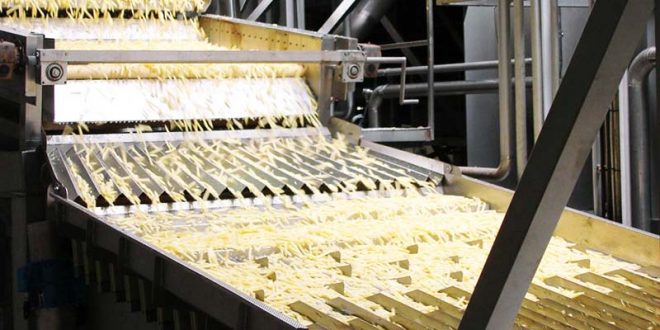
Optical sorters today are by far the best way to detect and eject unwanted materials, defective product, and product that’s not to specification. Optical sorters’ high-tech sensors see beyond the visible spectrum by also using infrared, ultraviolet, and other spectral imaging. This means optical sorters can recognize materials based on color, shape (including length, width, diameter, and area), and biological characteristics.
Modern optical sorters found in potato processing plants are among the most advanced in the world. They’re able to detect and classify a very wide range of defects and remove different types of organic and inorganic foreign materials while withstanding the production challenges inherent in the operating environment.
According to Marco Colombo, Global Potato Category Director, TOMRA Food, it’s not only the capabilities of optical sorters that matter – it’s also about taking the right steps at the right time to maximize processing efficiency. A typical processing plant will have different areas where sorting occurs: the receiving area, peeling area, wet strip processing area, and tote room. It is important, for example, to remove foreign materials prior to cutting to protect the knives; to sort in the wet strip processing area to ensure the output satisfied agreed tolerances; and to use sorters to make optimal use of the product by sending rejected product to a secondary stream (for example, a flake line). In the tote room the sorter runs a final check to see if the product output meets the required specifications on color and length, and conducts a final fore check prior to packing, making sure no foreign material reaches the packing area.
“While mechanical sorting may be able to remove obvious larger or smaller non-potato related objects such as rocks and dirt, and manual hand sorting could remove other obvious defects, optical sorting will consistently detect and remove both obvious and subtle defects as well as foreign and unwanted material,” Stephen Jacobs Head of Segment F&V, Bühler, explains.
You can read the rest of this article in your complimentary e-copy of the March/April2022 Issue of Potato Processing International magazine, which you can access by clicking here.