

The Physics Of Crunch: Drying Systems In Modern Potato Processing
The drying phase sits at the intersection of art and engineering in snack production. Between blanching and frying—or after expansion and baking—precise moisture control defines not only texture and crunch but also energy efficiency and product yield. As snack formulations evolve toward healthier profiles and lower oil content, drying equipment has become a focal point for innovation.
The Thermal Core Of Snack Production
For modern processors, drying is no longer a passive step between shaping and frying. It is a tightly engineered operation that determines how a product reacts to heat, absorbs oil, and develops texture. Variability in residual moisture can translate directly into inconsistency in expansion and color, while excessive drying wastes energy and affects yield.
In this context, equipment manufacturers have moved beyond conventional hot-air tunnels toward systems that combine aerodynamic precision, hygiene, and data-driven control. Global suppliers such as Bühler, Tummers Food Processing Solutions, and Tek-Dry Systems have each redefined what industrial drying means for the modern snack plant.
Tek-Dry Systems: Compact Efficiency And Energy Recovery
Tek-Dry Systems, now part of the Heat and Control group, brings a complementary philosophy centered on footprint reduction and sustainable energy use. The company describes itself as “a specialist supplier of high-quality, bespoke thermal processing equipment,” providing dryers, toasters, and coolers across multiple food categories.
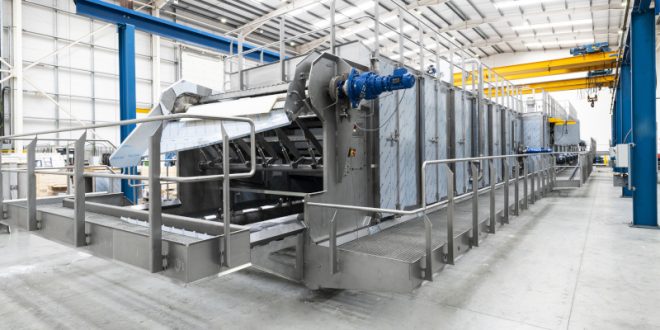
Its single-pass design—used in both French fry and snack dryers—has become a hallmark of efficiency. “Requested by some of the world’s leading French fry processors,” the design “delivers consistent drying within a reduced footprint,” combining accessible interiors with pre-installed rinse-in-place systems for fast sanitation.
Tek-Dry systems are adaptable to various heat sources, including “hot water heated using recovered energy from the fryer exhaust — a sustainable option that significantly reduces operating costs.” By integrating exhaust recovery, the company positions drying as part of an energy loop rather than a standalone process.
The same principle extends to preform dryers and coolers, which provide surface moisture removal before frying or seasoning. Tek-Dry highlights “high moisture removal per square metre of dryer, uniform moisture profile and lower operating temperatures” as defining metrics for performance.
With the rising importance of sustainability, such details resonate: lower operating temperatures mean less thermal stress, lower carbon emissions, and improved product consistency across shifts.
You can read the rest of this article in your complimentary e-copy of Issue #3 of Potato Business Digital magazine, which you can access by clicking here.