

Power and Control Features in Potato Conveying Systems

In the potato processing sector, the major players constantly try to choose the near-perfect conveyor for each unit cost. Starting with a ‘raw power’ vibratory conveyor at cultivar receiving point and vibratory conveyors handling a wide variety of tasks throughout the production line, to impulse shakers that feed packaging machines, matching the right conveyor to the process helps maximize overall equipment effectiveness (OEE).
The potato processing business actors demand robust conveyors that run consistently, without fail, because when a conveyor goes down, the entire production line stops. Reducing the total cost of ownership over the equipment’s life is a common objective that is affected by reliability. Product quality and maximizing yield are two important and frequent demands in the industry. Experts say that quality must be maintained throughout the process and at every equipment transfer. If there is product breakage during transfers, yield can be significantly affected.
Although the principles of potato conveying and transporting have not altered significantly during the last five decades, one of the most noticeable advancements in conveying equipment is in the power and control features that the latest conveyors are now built upon. The bulk of conveyors that are now manufactured offer high capacity handling, feature micro-processor controlled sensors, which allow the conveyors to be fully automatic, and so on. The top-notch conveyors use special drum motors and smooth-rolling wear-resistant parts, which guarantee maximum capacity whilst using a minimum of energy.
The demands and challenges that face potato growers and processors, and the industry as a whole, are always focused on gentle handling, to ensure optimum product quality, as well as speed and throughput. The potato and vegetable market, especially the large-scale supermarkets, continuously demand very high quality, consistent product that is processed from field to fork as quickly as possible. Also, there is increasing pressure on price and delivery time. For these reasons, companies manufacture conveyors to ensure minimal drops at transfer points, gentle yet robust belting, and the most advanced controls to ensure throughput and performance keeps up with demand in busy potato processing and packing environments.
Specialized Conveying Systems
Dewulf experts recently told Potato Processing International that conveying systems can be used, among other things, to help unload the product from a belt trailer into the receiving hopper more efficiently and in a more product-friendly way. For this purpose, Dewulf launched its MF 15x not so long ago.
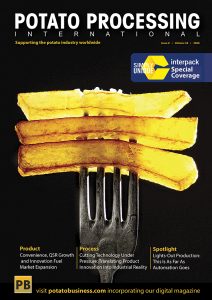
You can read the rest of this article in your complimentary e-copy of Issue 1 of Potato Business Digital 2022 magazine, which you can access by clicking here.