

Reducing Food Waste: What Regulation, Consumers, And Processors Are Demanding
Food loss and waste (FLW) are central challenges for the global food system, with profound environmental, economic and social consequences. At its core, food loss and waste refers to edible food that is discarded or otherwise lost along the supply chain — from production and processing through distribution, retail and consumption. In this context, food loss typically occurs before food reaches the consumer, while food waste refers to edible food discarded at retail or consumption stages.
Globally, roughly one-third of all food produced is never eaten, a scale that underscores the magnitude of the problem. These losses carry environmental consequences as well as economic and social ones. When food produced for human consumption is lost — whether in fields, factories, stores, or homes — all of the land, water, fertilizer, fuel and other resources embedded in that food are likewise wasted.
Food waste is also a significant climate issue. Discarded food decomposing in landfills produces methane, a greenhouse gas many times more potent than carbon dioxide. This dynamic has broad implications: wasted food contributes substantially to global emissions, and reducing food waste is recognized as an important mitigation strategy within climate policy frameworks.
International Goals And Policies
Globally, food waste reduction is anchored in the United Nations Sustainable Development Goals, especially Target 12.3, which calls for halving global per capita food waste at the retail and consumer levels and reducing food losses along production and supply chains by 2030.
This target has spurred action at many levels — from corporate initiatives to national climate commitments — but progress remains uneven. The European Union, for example, has introduced binding reduction targets requiring a 10% cut in food waste from processing and manufacturing by 2030, alongside a 30% per capita reduction across retail, restaurants, food services, and households, measured against a 2021–2023 baseline.
Commenting on the ruling, David Gudgeon, Head of External Affairs at Reconomy Connect, said:
“Almost 60 million tonnes of food are wasted every year in the EU — the equivalent of 132kg per person — so the introduction of binding reduction targets marks an important milestone. By 2030, member states must achieve a 10% cut in food waste from processing and manufacturing, and a 30% per capita reduction across retail, restaurants, food services, and households.”
Such regulatory frameworks reflect a shifting global consensus: food waste is no longer viewed solely as an ethical concern or operational inefficiency, but increasingly as a matter of climate policy and resource stewardship.
Economic And Consumer Dimensions
Consumers are also increasingly attuned to food waste, and this awareness is shaping purchasing behavior. Research conducted by Kerry in 2023 found that one third of consumers are willing to switch to brands or products that offer better shelf life, driven by financial pressures, environmental concerns, and awareness of global hunger.
According to the same research, 98% of consumers surveyed said they are actively trying to minimize food waste, while 72% believe that extending shelf life would help them reduce waste. Nearly 69% expressed an inclination to purchase products formulated specifically to reduce food waste.
Bert De Vegt, Vice President of Food Preservation and Protection at Kerry, said:
“Our research clearly demonstrates that consumers have a strong desire to reduce food waste in their own homes and they increasingly recognize the role of preservation in achieving this goal. As inflationary pressures remain, preventing products from going to waste has become more crucial than ever.”
These findings underline a growing convergence between sustainability goals and consumer expectations, placing additional pressure on food manufacturers and processors to address waste proactively.
For potato processors, food waste reduction is both a sustainability imperative and a practical opportunity to improve efficiency and resilience across the value chain.
Measurement And Target Setting
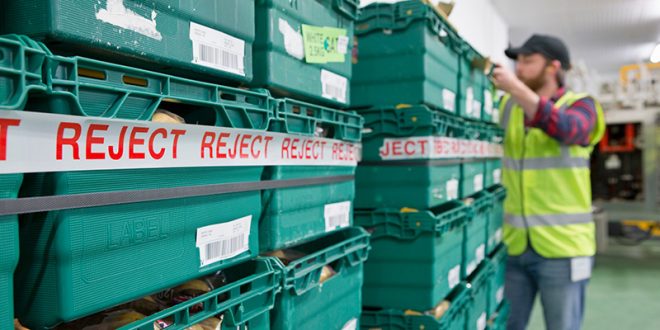
Effective food waste reduction begins with measurement. Industry guidance frameworks increasingly encourage processors to quantify food loss and waste across their operations, identify hotspots, and set reduction targets based on reliable data. Measuring waste at each stage — from raw potato intake through peeling, cutting, processing and packaging — allows companies to priorities interventions where losses are greatest.
Supply Chain Analysis And Collaboration
Supply-chain-level studies have shown that a substantial share of potato losses can occur at the processing stage. Analysis carried out within the Pacific Coast Food Waste Commitment identified that between roughly one fifth and more than one third of potatoes entering processing facilities may be lost during processing, depending on product type and facility design. Such findings highlight the value of cross-company and cross-sector collaboration in understanding where waste arises and how it can be prevented or reduced.
Optimizing Processing And By-Product Use
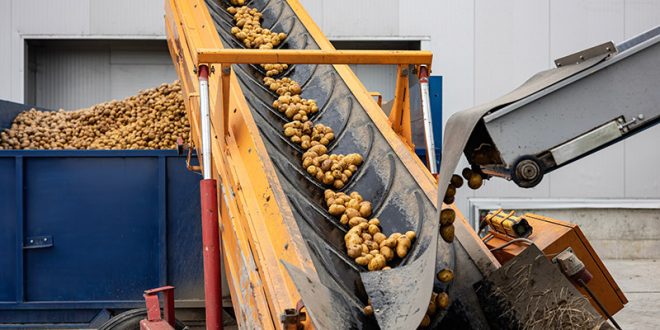
In potato processing, a significant proportion of waste consists of peels, trimmings and off-spec product. Increasingly, processors are seeking to valorize these side streams rather than treat them as disposal costs. Options include conversion into animal feed, recovery of starches and fibers for ingredient applications, or use as feedstock for anaerobic digestion to produce biogas.
These approaches support circular-economy objectives by keeping resources in productive use for longer and reducing reliance on landfill or low-value disposal routes.
You can read the rest of this article in your complimentary e-copy of Issue #4 of Potato Business Digital magazine, which you can access by clicking here.