

Smaller Salt for a Bigger Flavor
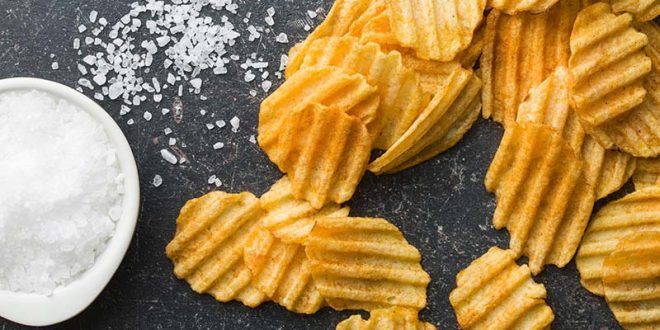
A University of Nottingham research, published in the journal Food & Function, follows an investigation into how salt is released from chips into the mouth. Though focused on chips, the research is relevant to salt reduction in all snack foods.
Ian Fisk, a lecturer in the division of food sciences, says: “The ‘salt burst’ from chips is only released into the mouth 20 seconds after chewing begins. This means that in many cases the chip may have already been swallowed before the majority of the salty taste is detected.
“Our aim is to develop a series of technologies that accelerate the delivery of salt to the tongue by moving the burst from 20 seconds to within the time that you normally chew and swallow. This would mean that less salt would be needed to get the same amount of taste.”
Excess salt in the diet has been linked to high blood pressure and cardiovascular disease. The World Health Organization’s recommendation for daily salt intake is just five grams, though many people take in twice that amount. The reduction of salt intake is now a major challenge for health authorities and the food industry.
Why is Salt in Our Food?
Salt isn’t just a flavor enhancer. Historically it has been added to enhance shelf life, improve functionality, and control fermentation. Breads, snacks, and potato chips are among the major dietary contributors to our salt intake.
There is now a clear need for the food industry to find ways of preserving these attributes while maintaining the consumer experience.
Salt Microspheres
Tate & Lyle’s SODA-LO is a groundbreaking, salt reduction ingredient that tastes, labels, and functions like salt because it is salt. With SODA-LO, food manufacturers can reduce salt levels by 25% to 50% in various applications without sacrificing taste.
Soda-Lo, which is engineered using a patented process that re-crystallizes salt to create free-flowing, microscopic hollow balls just 5-10 microns in size, offers formulators a distinct advantage over other sodium reduction strategies as it can still be listed as ‘salt’ on food labels.
It is a well-known fact that the smaller the crystals, the higher the salt perception. However, simply grinding salt to make the particles smaller does not deliver as the tiny particles quickly lose their free-flowing properties and stick together.
You can read the rest of this article in your complimentary e-copy of Issue 2 of Potato Business Dossier, which you can access by clicking here.