

Sophisticated Potato Inspection

Improvements in sorting machinery are aimed at many growers but are also of benefit to processors. Good sorting solutions can reduce labour and storage costs. Two well-known companies describe how their machines contribute to upgrading business.
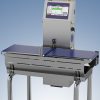
Sorting machines can detect and remove soil clods, stones and rotten potatoes. They handle potatoes gently, which results in greater yield and a better quality of product. They are also used for separation of potatoes by colour and size. Norwegian company Tomra recently presented their new “ground-breaking” Field Potato Sorter (FPS), which illustrates the benefits of their sorting machinery.
The company says that the system offers growers significantly reduced labour and storage costs, improved product quality and increased output, compared to more traditional sorting methods. These benefits partly increase because the Field Potato Sorter replaces difficult-to-recruit human labour previously needed to clean up the product stream before going into storage.
“The Field Potato Sorter uses unique multi-spectral near infra-red [NIR] technology. Consistent, long-life accuracy is guaranteed by the durable construction with tough electronics and rejector systems. The “off-belt’ view guarantees unobstructed sight of the product and low maintenance,” said Jim Frost, Market Unit Manager, whole products, at Tomra Sorting Food.
Undesirable material
Explaining how the machine worked, he added: “After typical loose soil removal systems, potatoes are spread uniformly on to the in-feed belt and scanned by sensors, across the full inspection width, while in-flight. A few milliseconds later, undesirable material is rejected by intelligent finger ejections, positioned at the end of the conveyer belt, while the good product continues along the grading line.”
Optical inspection
Tummers have developed sorting machines inspired by a producer’s requirement to have the right base material. Some packages require small potatoes; others require large potatoes. The same accounts for discolorations and defects.
Some will allow for certain defects in end-products; others require a spotless base material. Pre-sorting for the right end-product allows the customer to have the desired end quality and it allows the producer to get a better yield out of their base product. When a truckload is not 100 per cent perfect, they can sort out the bad potatoes and still use the majority of the load. Without a sorting line, they may be forced to reject the whole truckload. Another advantage is that it allows them to use optical inspection ( – manually or with an optical sorter) of the raw material straight after receiving it, so they know exactly what kind of quality is available for their process.
Read the whole story, including details on turnkey washing lines and product consistency, in Potato Processing International, May/June issue.