

Researchers Introduce New Bacteria Repelling Wrap
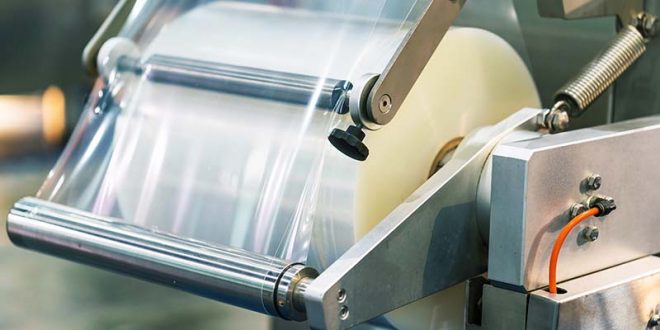
A team of researchers at McMaster University has developed a self-cleaning surface that can repel all forms of bacteria, preventing the transfer of antibiotic-resistant superbugs and other dangerous bacteria in settings ranging from hospitals to kitchens, to food packaging, according to a report in the university’s publication, Brighter World.
The new plastic surface – a treated form of conventional transparent wrap – can be shrink-wrapped onto surfaces, such as handles, that can be magnets for bacteria such as MRSA and C. difficile. The treated material is also ideal for food packaging, where it could stop the accidental transfer of bacteria such as E. coli, Salmonella and listeria from meat and other foods, as described in a paper published by the journal ACS Nano.
The research was led by engineers Leyla Soleymani and Tohid Didar, who collaborated with colleagues from McMaster’s Institute for Infectious Disease Research and the McMaster-based Canadian Centre for Electron Microscopy.
Inspired by the water-repellent lotus leaf, the new surface works through a combination of nano-scale surface engineering and chemistry. The surface is textured with microscopic wrinkles that exclude all external molecules. A drop of water or blood, for example, simply bounces away when it lands on the surface. The same is true for bacteria.
“We’re structurally tuning that plastic. This material gives us something that can be applied to all kinds of things,” says Soleymani. The surface is also treated chemically to further enhance its repellent properties, resulting in a barrier that is flexible, durable and inexpensive to reproduce, the team claim.
“We can see this technology being used in all kinds of institutional and domestic settings,” Didar adds. “As the world confronts the crisis of anti-microbial resistance, we hope it will become an important part of the anti-bacterial toolbox.”