

Study Reveals Potential of Potato Peels to Remove Heavy Metals and Dyes from Water
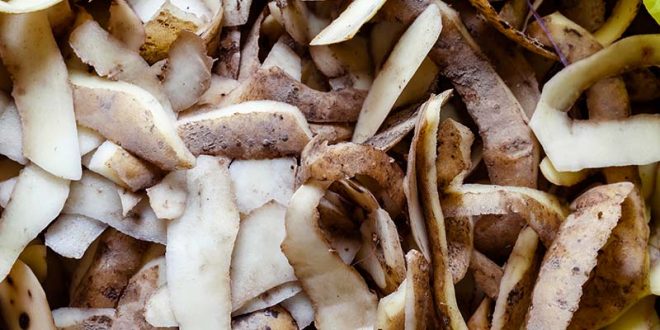
A recent study conducted by a research team at Batman University in Turkey has found that discarded potato peels could play an important role in addressing one of the world’s most persistent environmental challenges — the purification of contaminated water.
The study, published in the Ionics journal (Springer), explored the use of raw, waste potato peel as a bio-adsorbent capable of removing heavy metals such as mercury and industrial dyes from water. The results revealed that the peels achieved high removal efficiency within remarkably short time frames, suggesting that this low-cost material could be repurposed for environmental remediation.
Researchers tested the adsorption performance of potato peels across varying mercury concentrations and different types of anionic dyes. The experiments demonstrated a strong affinity for both contaminants, with potato peels rapidly capturing and binding the harmful substances from aqueous solutions.
Temperature played a key role in the process: the adsorption efficiency increased significantly at higher temperatures, indicating an endothermic nature of the reaction. The study also examined thermodynamic and isotherm models to describe how the contaminants interacted with the surface of the potato peels, uncovering a complex interplay between surface binding sites and pollutant particles.
The findings suggest a scalable and environmentally friendly pathway for water purification using agricultural waste, offering an alternative to costly chemical or synthetic filtration materials. According to the researchers, the approach could be further developed through pilot-scale trials that assess real wastewater conditions and evaluate long-term performance, cost efficiency, and reusability.
If proven effective in industrial or municipal applications, this technique could help reduce waste from potato processing while simultaneously addressing the pressing issue of water pollution.