US: Frozen French Fries Fail to Reach Consumers
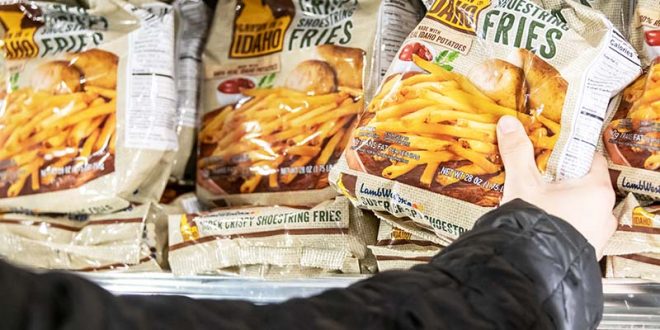
Frozen French fry sales at grocery stores in the U.S. spiked 78.6% for the four-week period ended April 4, according to Nielsen data, resulting in shortages at many supermarkets.
Frozen fries are an ideal pandemic staple – offering comfort, convenience and long-shelf life for U.S. families accustomed to fast-food meals and school cafeteria lunches. With the foodservice sector shut down, demand for frozen French fries has declined dramatically, but at the same time, retail demand is booming. One of the main hurdles in rerouting the frozen products towards the retail channels is the extra-large size of foodservice packages, that are meant for kitchens that turn out dozens if not hundreds of meals each day.
“Think Costco, but bigger,” said International Foodservice Distributors Association (IFDA) CEO Mark Allen, referring to the oversized products sold at warehouse retailer Costco Wholesale Corp.
Nondescript foodservice packaging also does not have the ingredient and nutrition labels required by the U.S. Food and Drug Administration (FDA) or the bar codes needed in grocery checkout lanes.
While the FDA has said it would temporarily relax labeling rules and protect consumers with food allergies, foodservice suppliers still face significant hurdles switching to retail-friendly formats. New equipment for packing and labeling products is expensive, and plastic containers are in short supply.
Kraft Heinz’s Ore-Ida, the main producer of frozen fries for supermarkets, is rushing to bolster supplies. “Our Ore-Ida factory is running at full capacity to keep up with demand,” Kraft spokesman Michael Mullen said.
At the same time, major fast-food French fry suppliers McCain Foods, J.R. Simplot Co and Lamb Weston Holdings are canceling potato orders.
Fast-food suppliers’ freezers are full of frozen fries, hash browns and potato skins and their storage sheds are packed with potatoes, farmers and experts told Reuters.
Their demand is down because four in ten U.S. restaurants are closed, as are schools, hotels and workplaces. Fast-food chains are doing drive-through only, and with no set date for lifting stay-at-home orders, the outlook for the foodservice industry is uncertain.
The National Potato Council said there are USD750m to USD1.3bn in potatoes and potato products stuck in the supply chain.